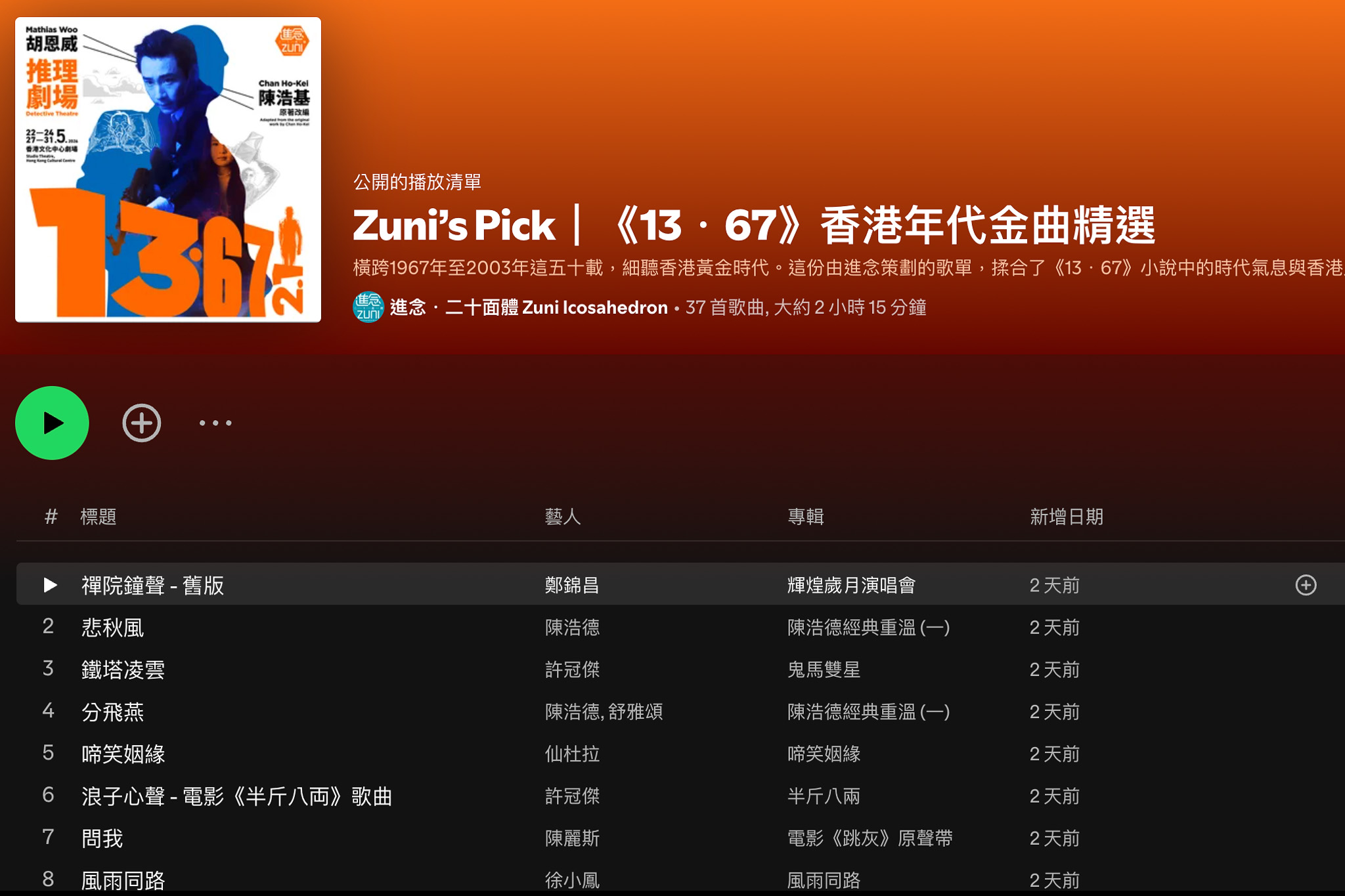
Thank you for watching 13.67 2.1! Your feedback matters to us, and we invite you to complete our online questionnaire after the performance. Don’t forget to subscribe to Zuni on WhatsApp to receive an exclusive 15% discount code for future tickets. To keep the experience going, we have also curated a special “Zuni’s Hong Kong Golden Oldies Playlist” playlist, inviting you to rediscover and relive the nostalgic sounds of Hong Kong.
Director’s Notes by Mathias Woo (May 19, 2025)
Back then, we still wore half a face. The theatre was filled with bodies segmented by masks, yet their eyes were remarkably bright. We devised a method to pre-record voices, which, during the performance, came alive, whispering in the audience’s ears as if the actors truly spoke on stage. The actors themselves remained silent, merely moving their lips and shifting their bodies to enact a play.
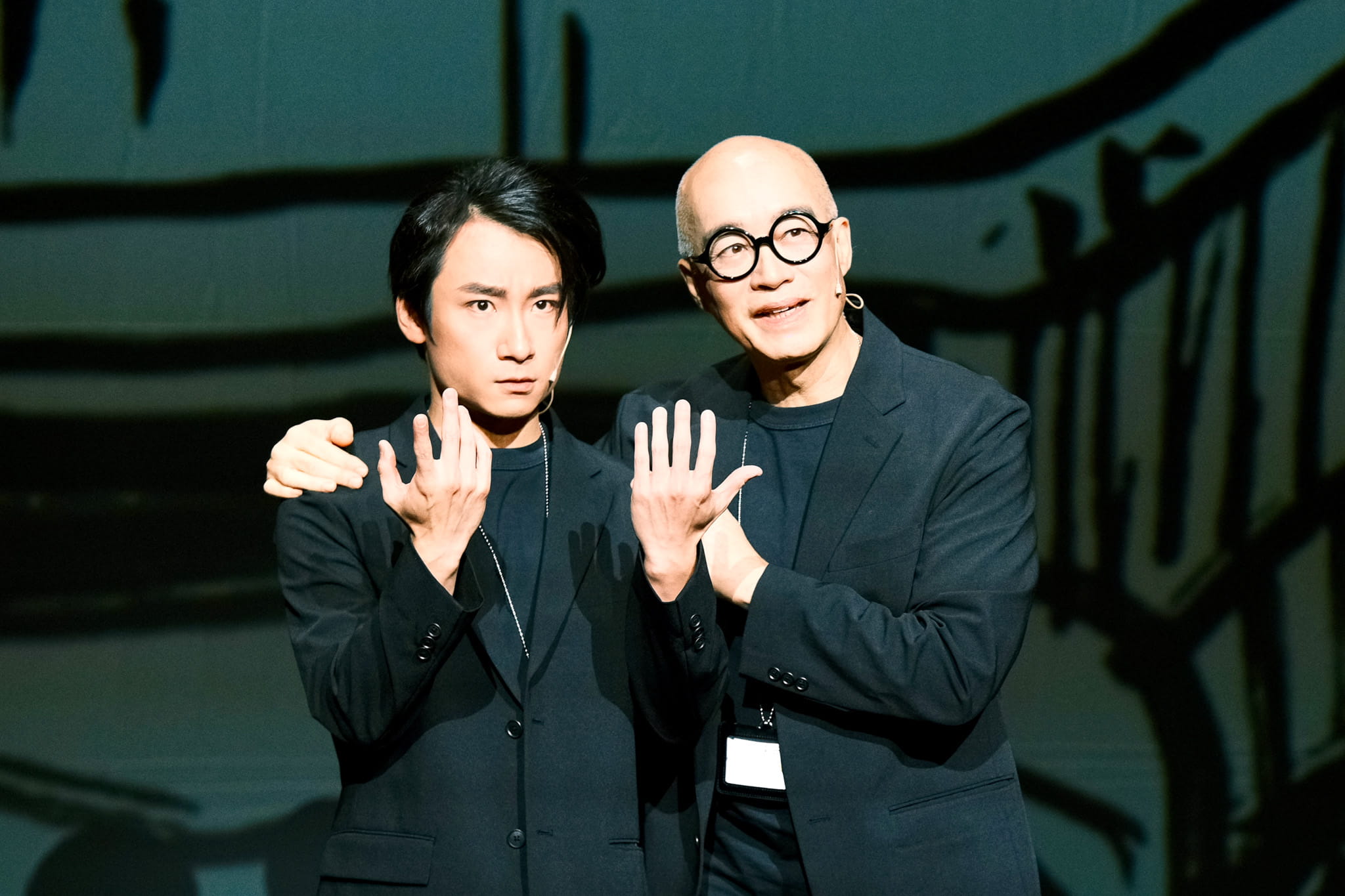
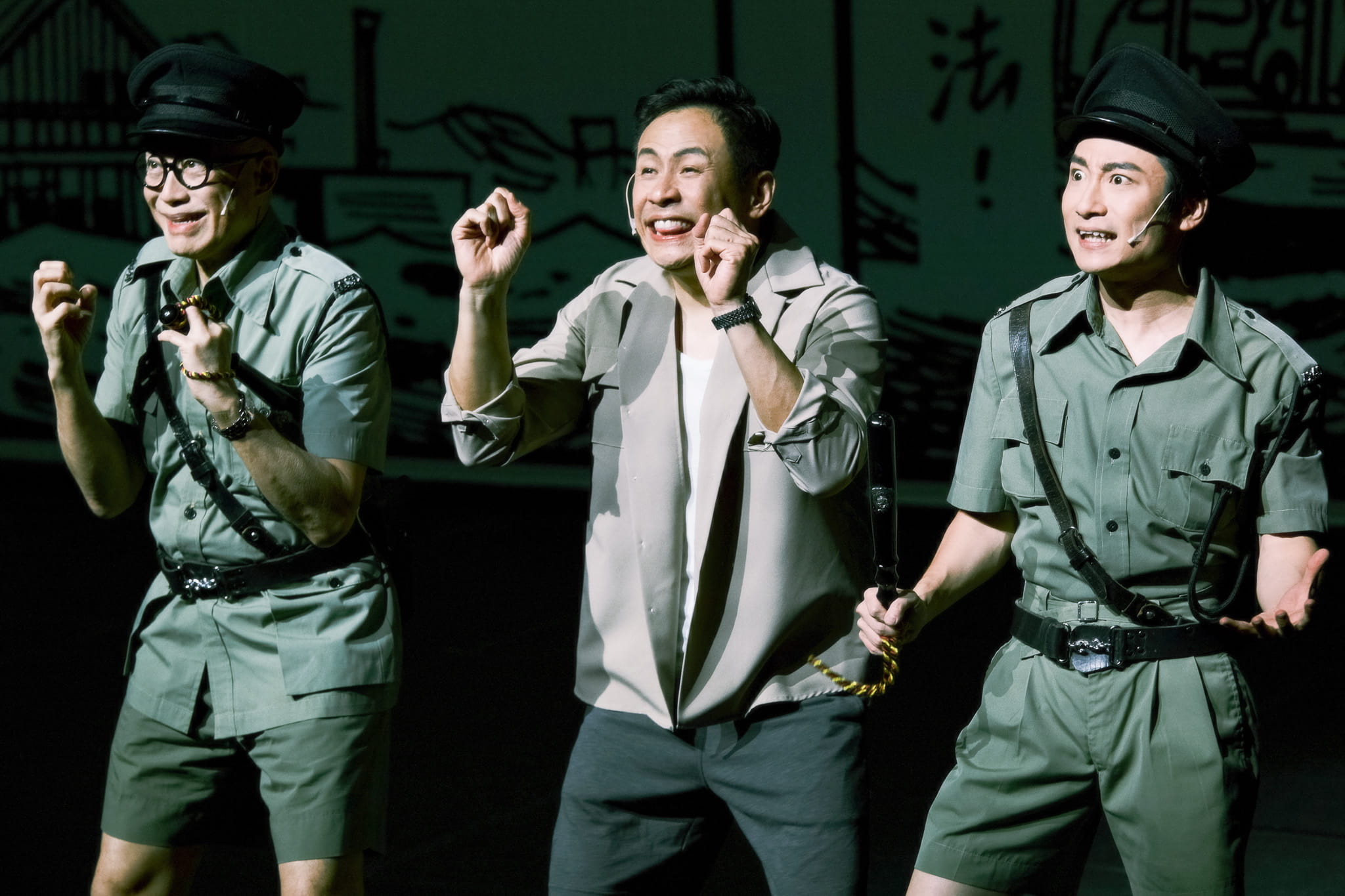
For 2025 revival, I’m grateful to Joseph Chan (Editor’s Note: renowned film producer, and manager) for recommending Wong On-ching. Her solid foundation in Cantonese opera, with every movement and gaze, brings the traditional operatic charm, creating unique sparks with my long-time collaborators David Yeung (founding member of Zuni), Zachary Pink Yung (Ah Ping, Young Fellow in Performance of Zuni), and Carson Chung (resident creative actor of Zuni). It’s fascinating how David and the others, having worked with me for years, can understand each other with just a glance, yet in rehearsing this play, we’re all trying new approaches. On-ching’s involvement has made us “old hands” re-examine the essence of performance.
Performing in Cantonese is simply marvelous. It can erupt like a machine gun, rapid-fire, showering the house with applause; or it can be slow and deliberate, meticulously refining each word between the lips and teeth, enunciating every single word of the script so clearly that every syllable resonates with the audience. This adaptable language is perfect for theatrical texts, making it incredibly engaging. Our actors are adept at this, at times delivering lines like “large and small pearls falling onto a jade plate,” and at other times drawing out their tones, biting into each word with distinct clarity.
The pandemic is most peculiar; it has brought humans and machines closer. A small screen became a window through which we viewed the world, yet our vision grew increasingly blurred. Now, as the pandemic gradually recedes, people are once again streaming into theatres, relearning how to see with their own eyes and listen with their own ears
Theatre, in the end, is magical. Even with myriad technologies augmenting it, it stands firm. Humans ultimately need to touch real spaces; the light and shadows on a screen are merely flat illusions. Even wearing a “VR headset,” one cannot truly grasp the joys and sorrows of the play. So the question arises: how do we make these cold machines come alive in the theatre? This is just the beginning.
Technology usually gravitates towards amusement parks, where gold and silver are piled high. After three to five minutes of excitement, nothing remains. Theatre is different; it demands that people sit for two or three hours, with their eyes, ears, and minds fully engaged. With so much available to watch nowadays, if theatre doesn’t reinvent itself, it risks becoming an antique.
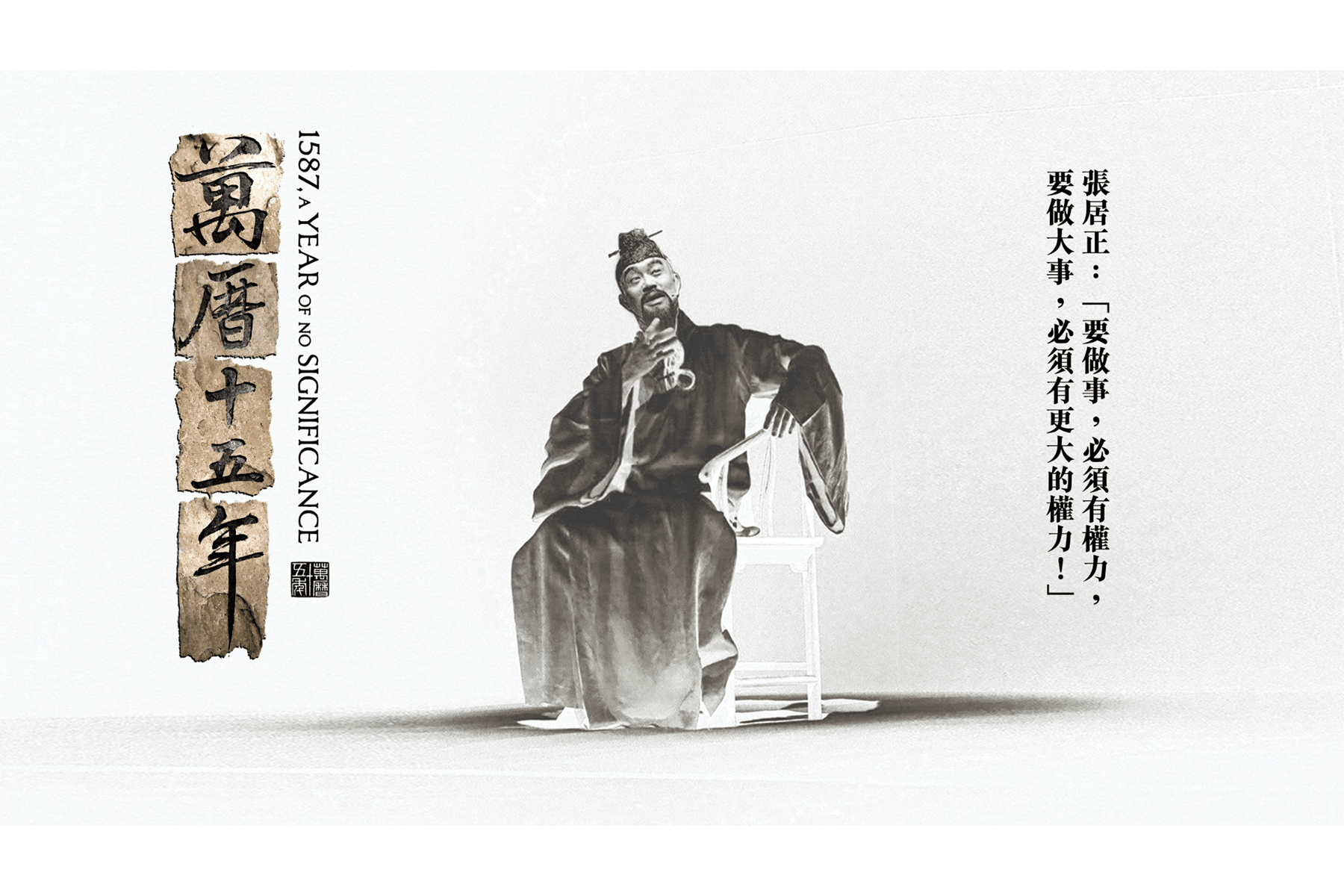
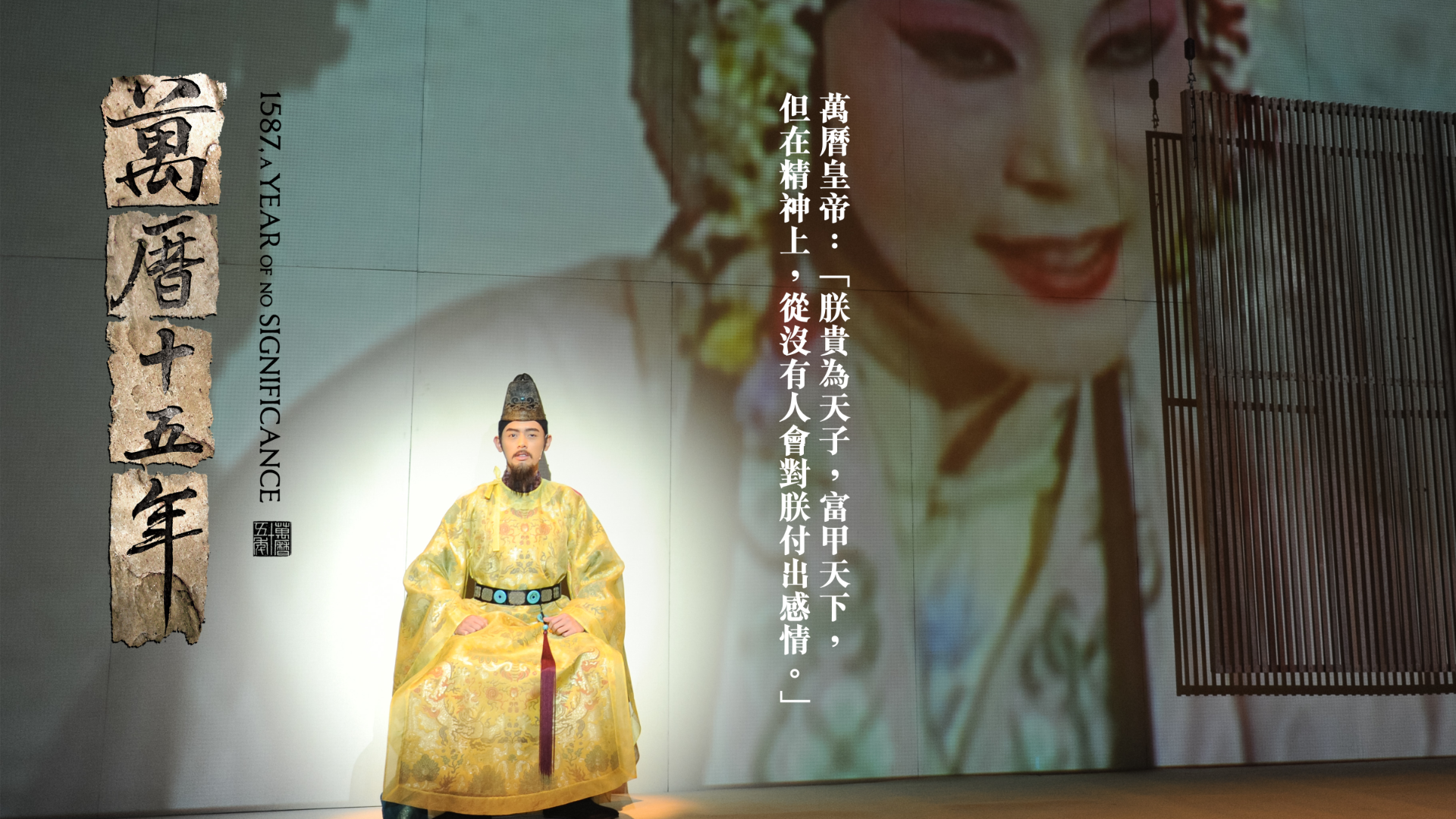
The novel 13.67 has the blood of grand history flowing through its veins. The author must have read Ray Huang’s 1587, A Year of No Significance, adopting his tone from the very beginning. When directing, I always consider how to build a historical framework on stage. Theatre doesn’t just entertain; it also educates – albeit the most superficial kind of education. For deeper understanding, one must delve into books. Even with “artificial intelligence,” without some knowledge, one cannot discern whether it utters pearls or chaff.
In ten years, humans and machines will likely live differently. Will humans become dumber because of machines? Or will machines free people to pursue more meaningful endeavors? What is meaningful? Is money the ultimate goal? The more advanced technology becomes, the greater the disparity between rich and poor. When even consumers are exhausted, what good are these inventions? This is the fundamental question.
We are becoming increasingly minuscule, transforming into a number in the flow of data. We live in the virtual realm, where knowledge comes too easily. What will humanity become if this continues? Are our worries already outdated? There’s a scene in 13.67 about pagers that perfectly illustrates the entanglement of technology and society – they originally fed each other.
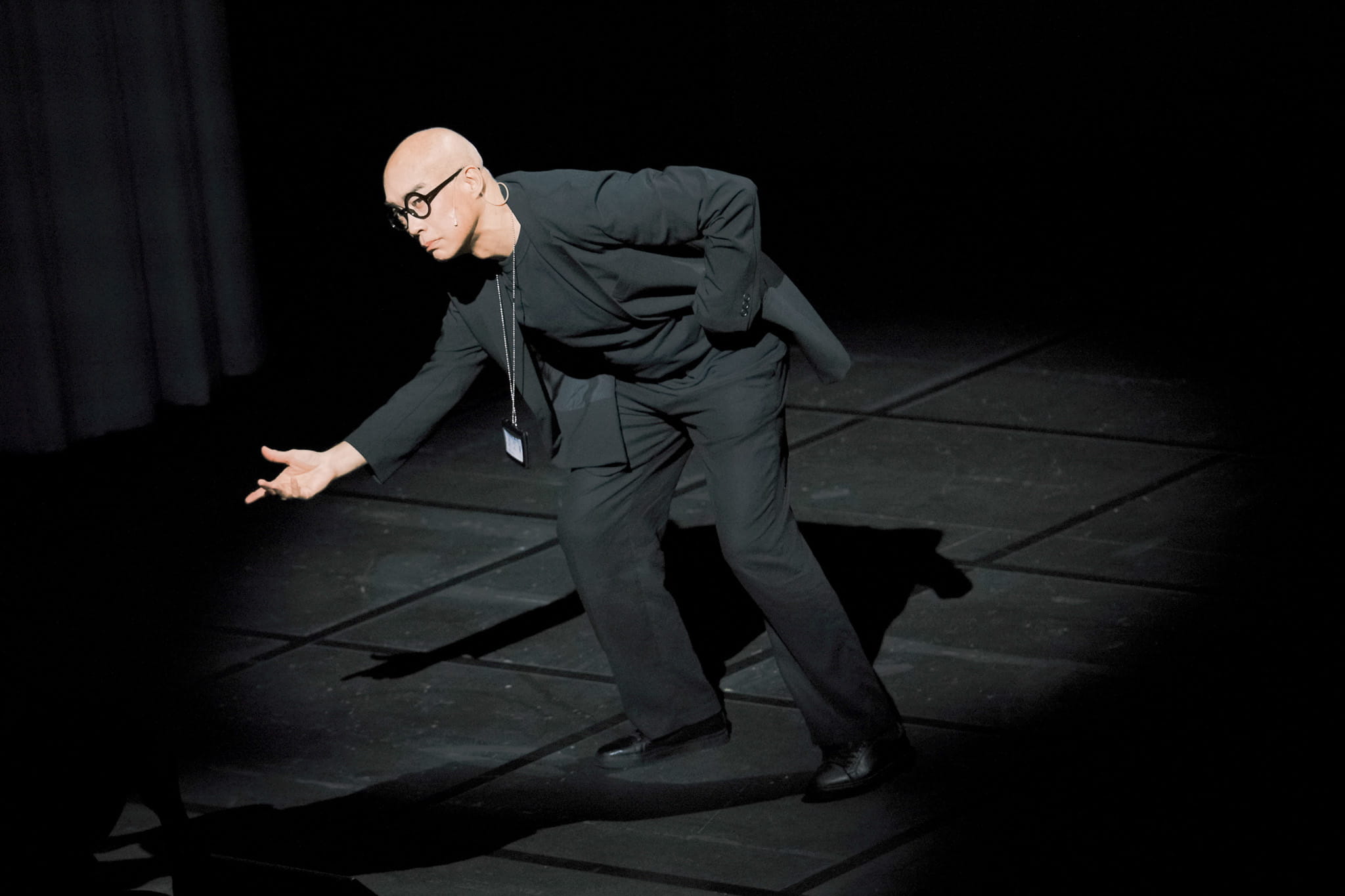
Technology cannot be separated from society, and society cannot be separated from technology; this is our current fate. For this revival of 13.67, in the post-pandemic landscape, we’ve added some technological seasoning to the play. Actors tell stories with their bodies within the precise space I designed.
Change is right before our eyes. The sight of Hongkongers flocking to Shenzhen is just one glimpse of it. Watching 13.67 might offer insight into the grand historical perspective – stories always have causes and effects; one cannot simply extract a single segment. Hongkongers must understand their past to see their future clearly. History is never isolated; it is a continuous line, and we are merely a few ink spots on that line.
CHAN Ho Kei’s “13·67” has won countless awards. WONG Kar Wai even bought its rights and optioned it for film. The book contains six standalone “honkaku” (orthodox) mysteries, each a puzzle to be unravelled. Together they form a full portrait of Hong Kong society. As the author puts it, “I didn’t want to write about ‘cases’ anymore. I wanted to write about a character, a city, an era.”
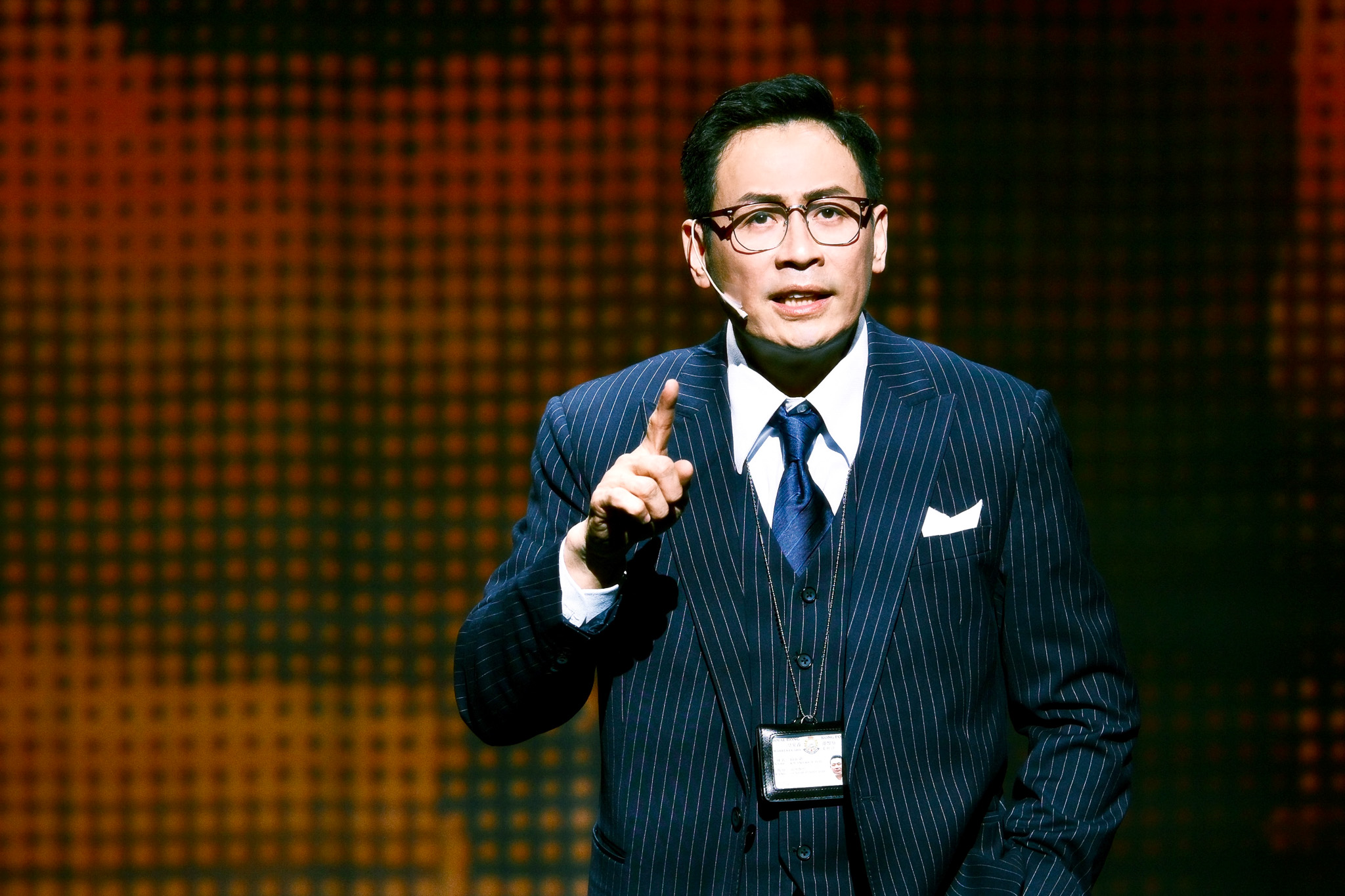
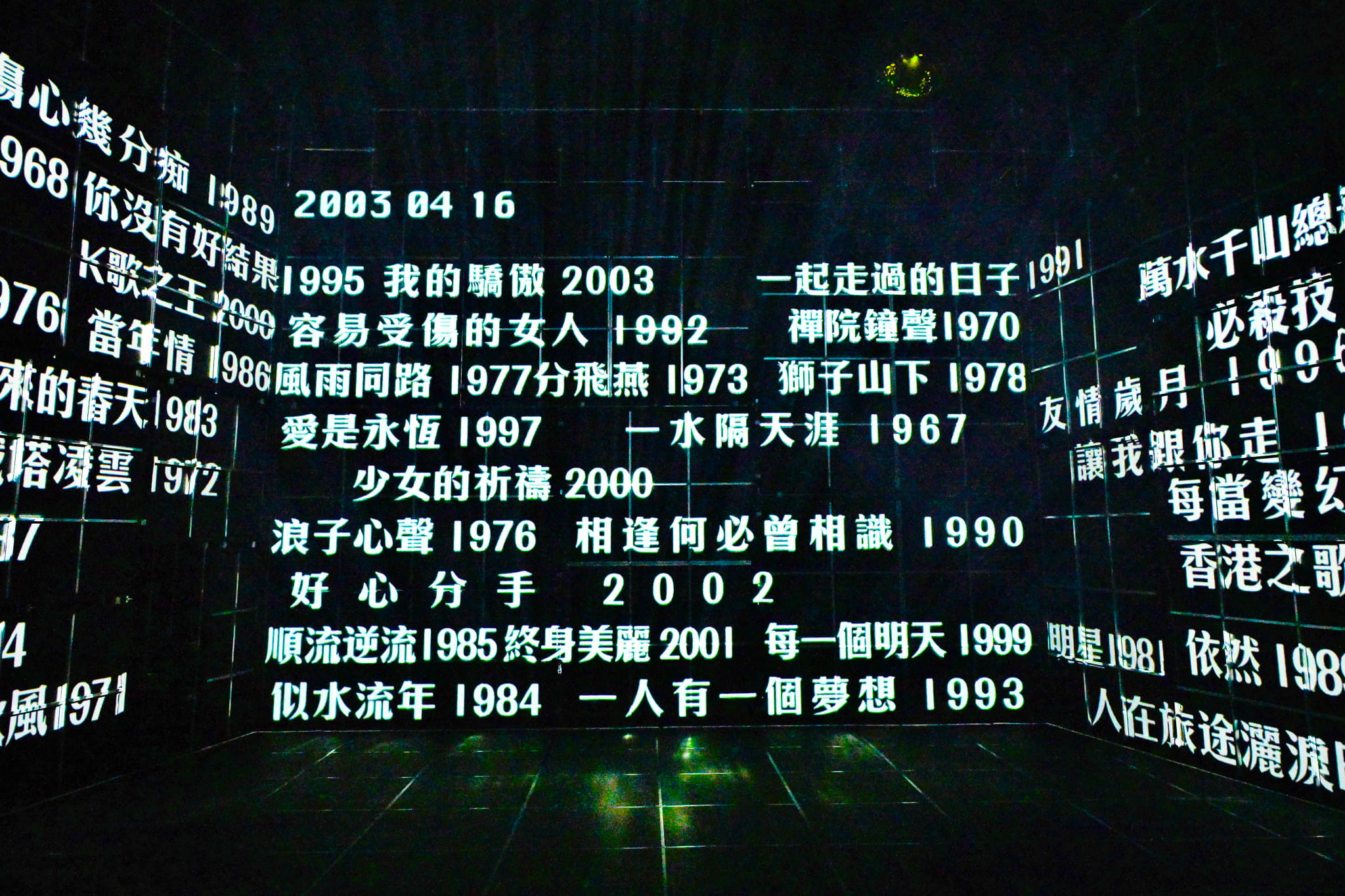
Zuni Icosahedron first staged “13·67” in 2022. May 2026 marks its fifth run. Version 2.1 uses Arts Tech to place audiences inside an immersive space, led through Hong Kong history from 1967 to 2013 by era-spanning pop songs — chasing truth across gripping cold cases, re-reading a city’s memory.
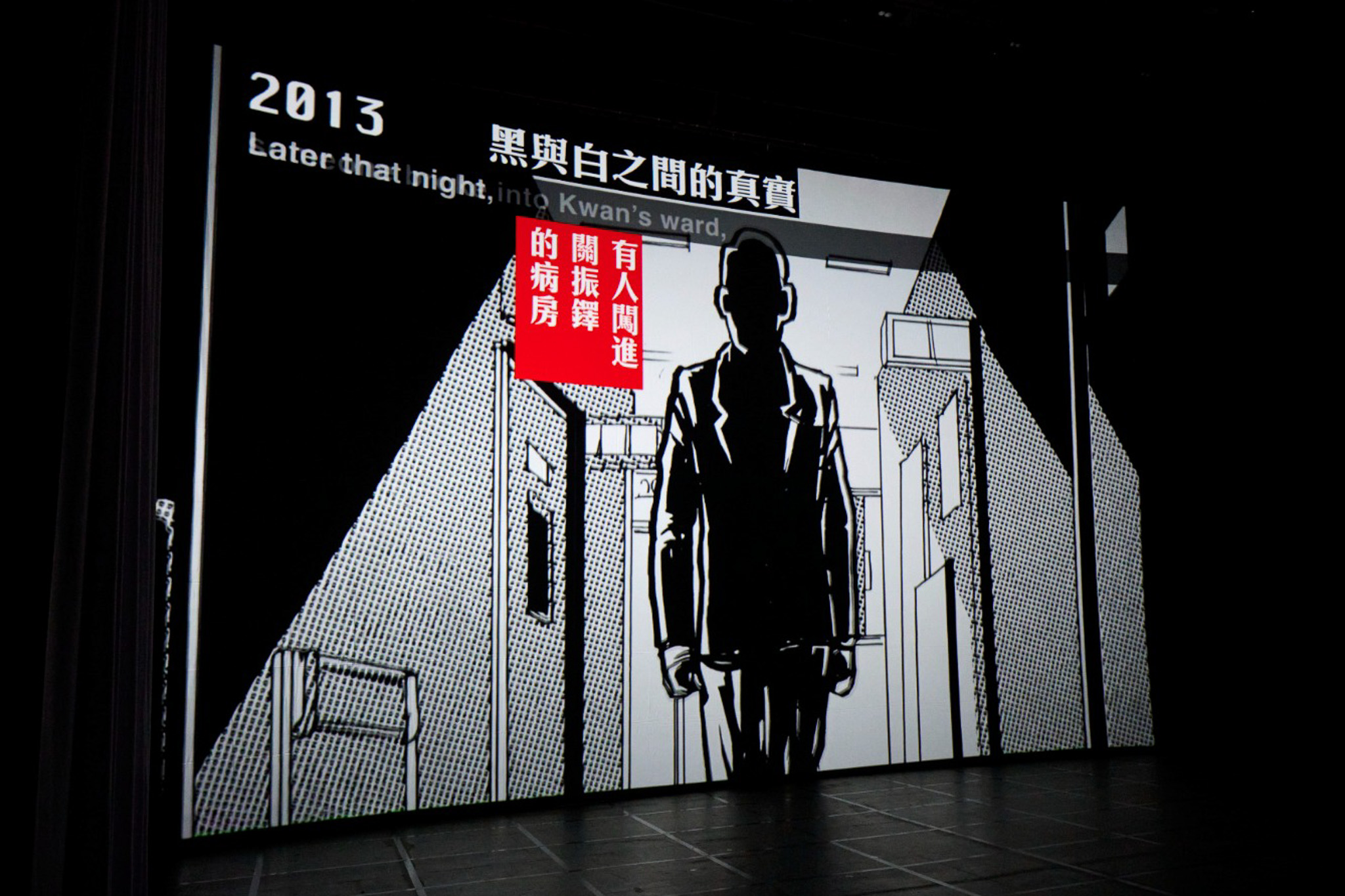
Published in 2014, the novel debuted with Chapter One, The Truth Between Black and White (黑與白之間的真實). CHAN then adopted a reverse chronology, initially planning a pure plot-driven mystery. Moved by Hong Kong’s social changes, he rebuilt the outline around character and society, sketching “the rise and fall of a character, a city, an era”.
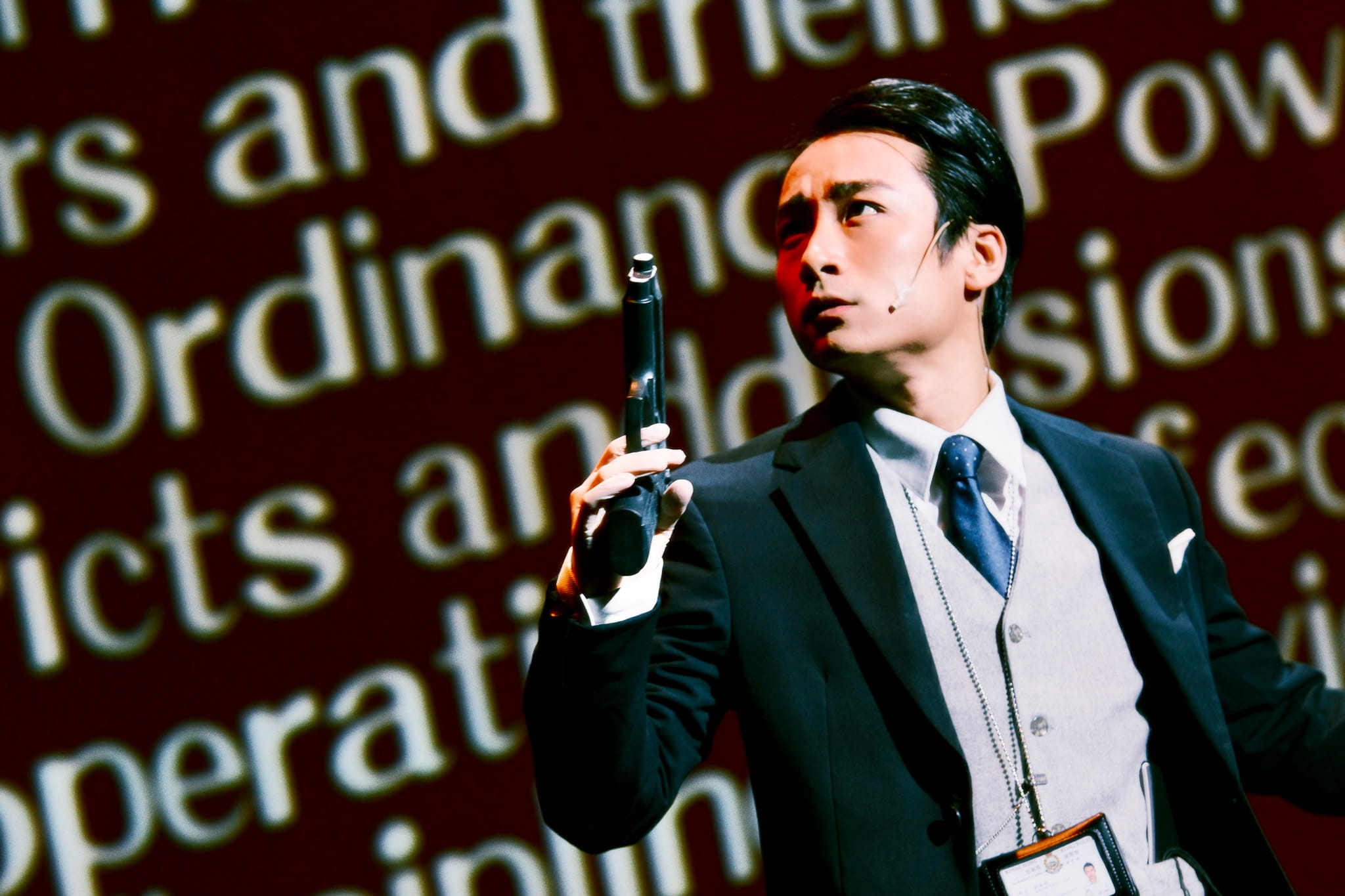
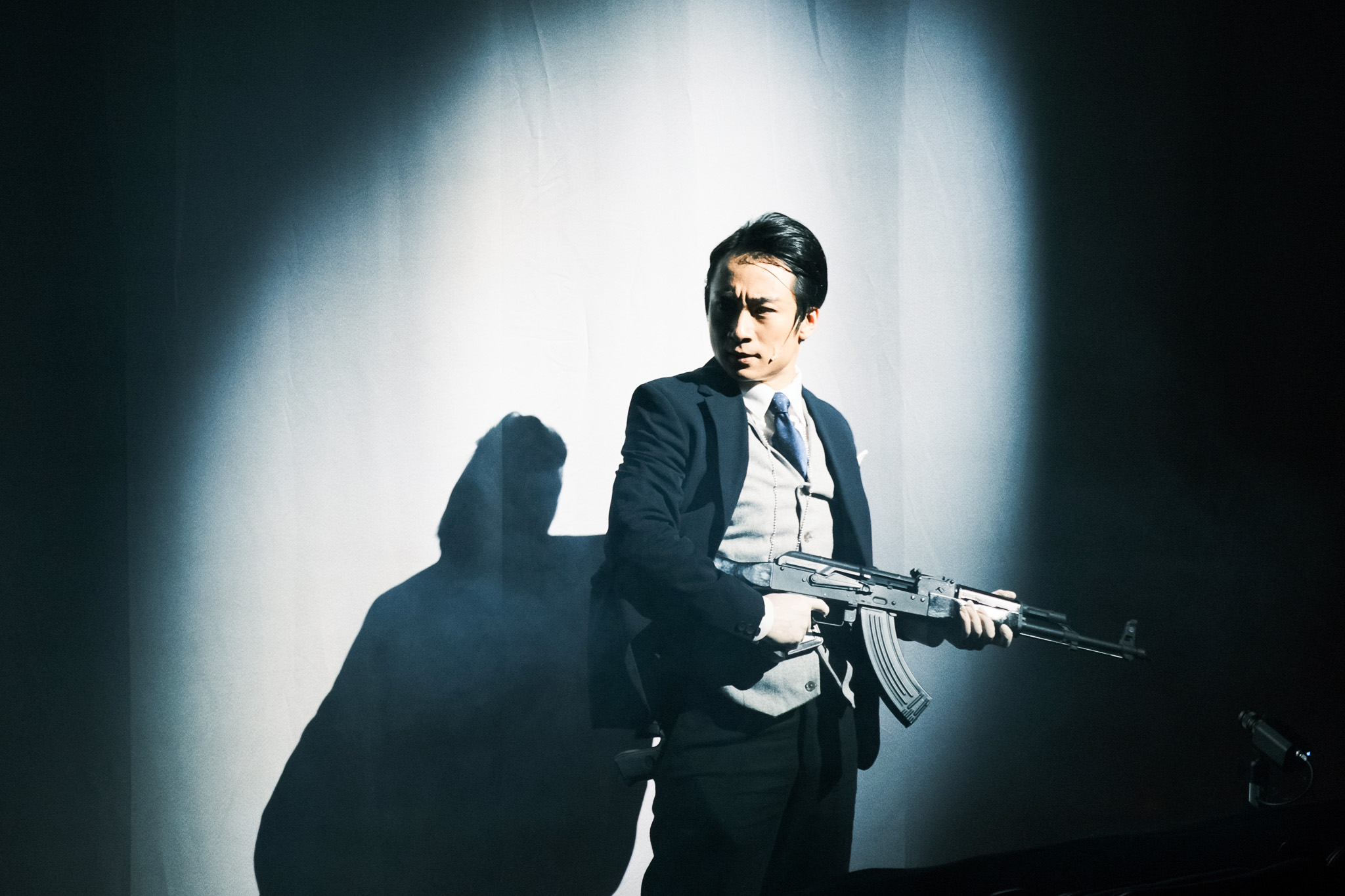
“A character” here refers to protagonist KWAN Chun Dok, the fabled detective known as “Sky Eye”. Spanning 1967–2013, the cases hit every key Hong Kong moment — jailbreak, kidnapping, shootout, high-society murder, triad power struggle, and car bomb. KWAN and apprentice LOK Siu Ming crisscross the city, uncovering hidden truths. Alongside the mystery, readers live Kwan’s full arc: raw rookie to respected CID inspector to intelligence chief. In his final role as a retired consultant, he remains pivotal even as he lies dying in a hospital bed.
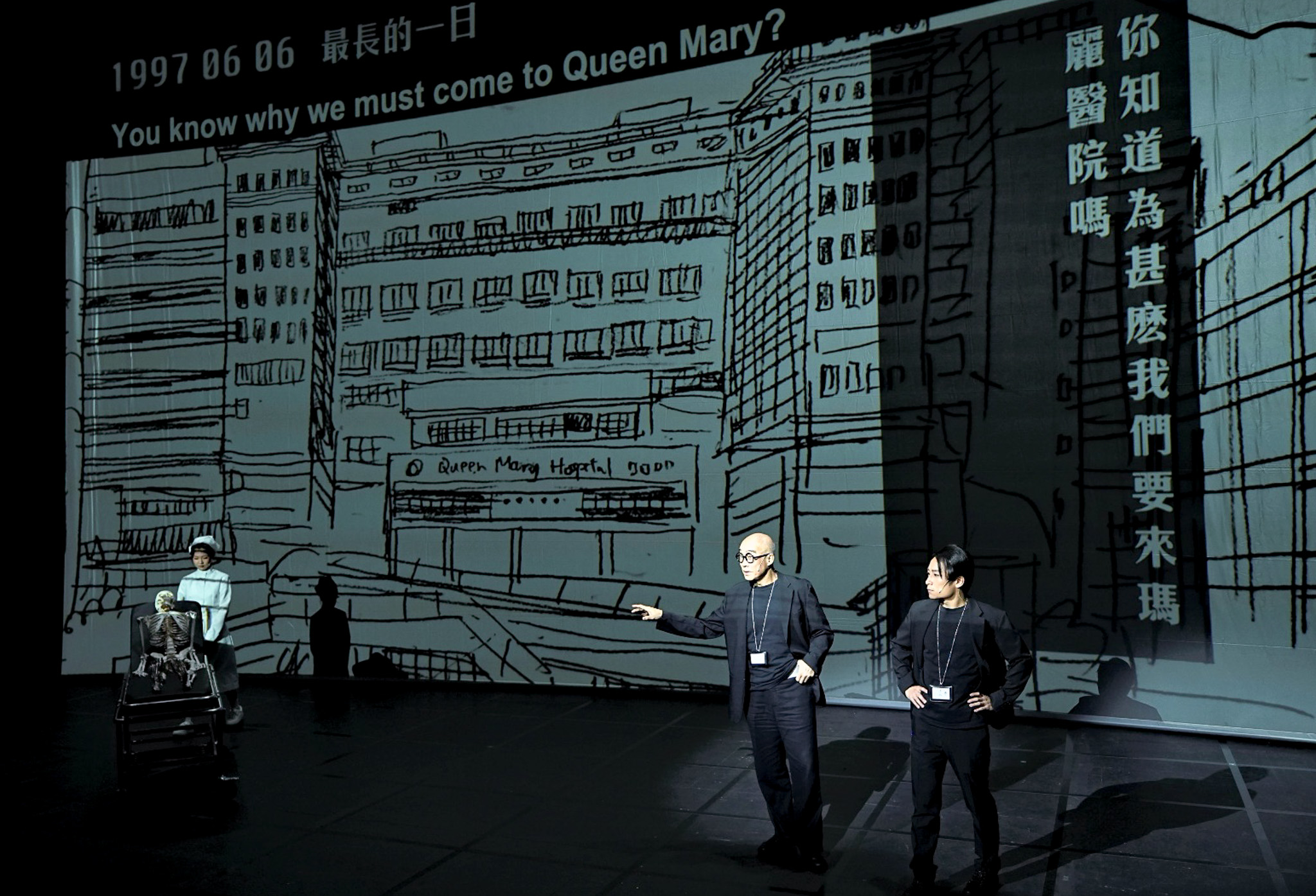
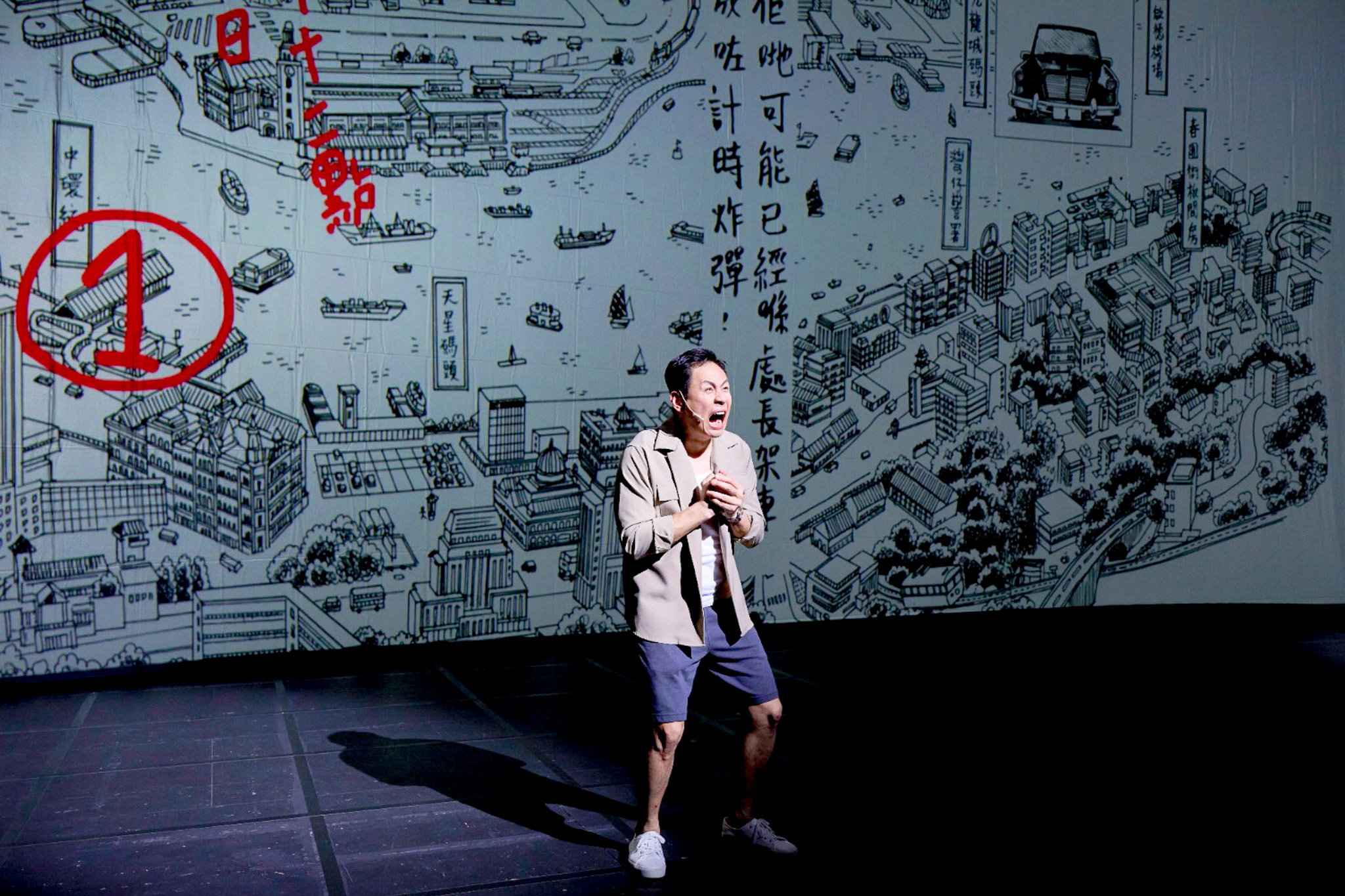
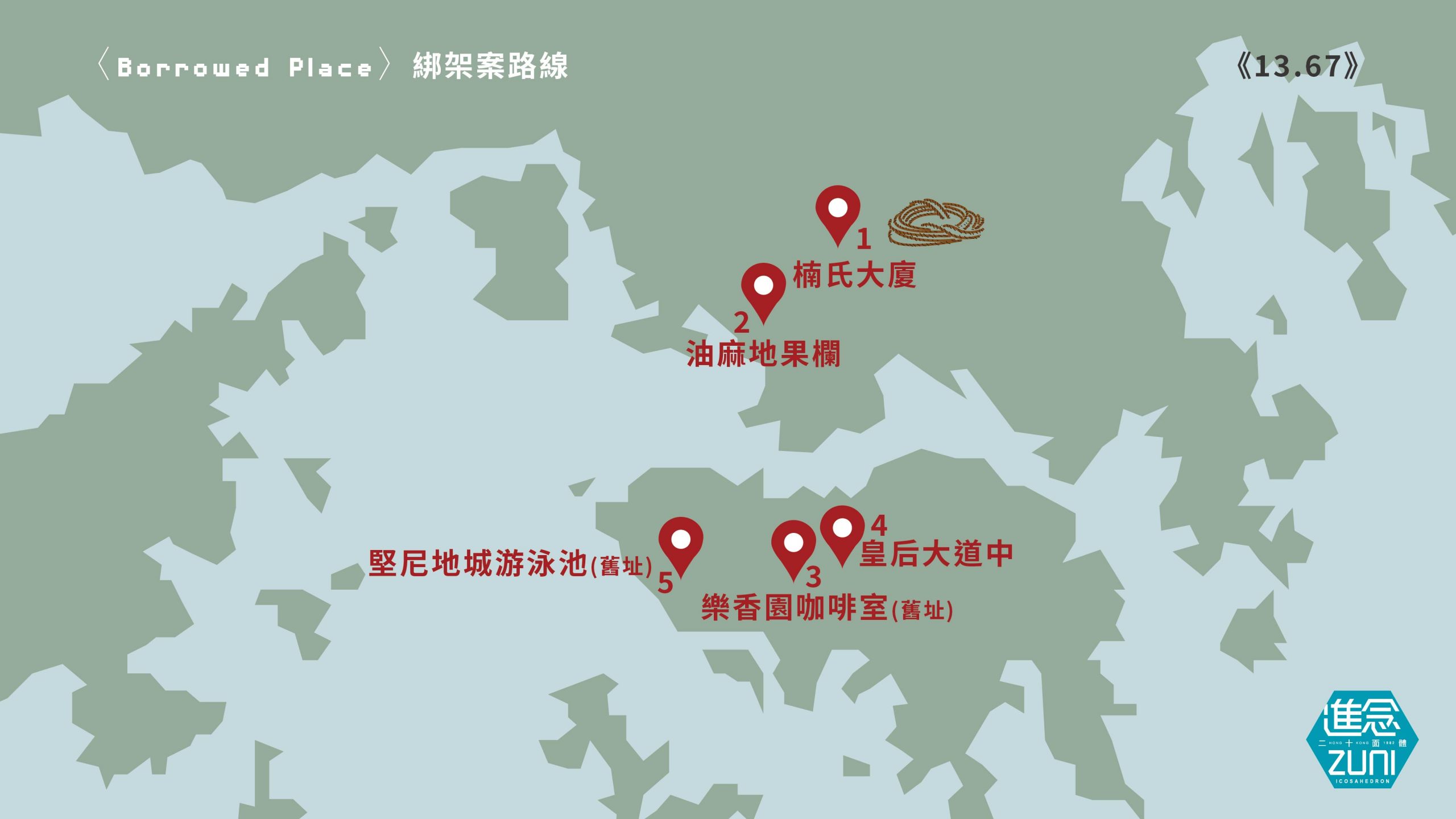
Hong Kong itself is a major character. CHAN weaves the city into every scene: in the opening scene, KWAN and LOK are seen drinking in the MacPherson Stadium stands; The Longest Day (最長的一天) features a corrosive acid attack case at Ladies’ Market and Graham Street market; in Borrowed Place, a victim was instructed to enter a hideout on Wellington Street before circling round to Kennedy Town Pool to pay the ransom; in Borrowed Time, a bomb trail spans all of Hong Kong, Kowloon, and the New Territories. The novel maps a city. Many locations have since been transformed. Change, as ever, is the only constant.
On stage, the city’s transformation hits harder. Zuni’s 2022 production evolved into 2025’s “13·67” 2.0, layering familiar pop songs to evoke collective memory, weaving past culture into the crime narrative, letting audiences feel the pulse of social change through theatre.
The playlist spans decades: Teresa Teng’s “A River Separates Us” (1967), CHENG Kwan Min’s “Song of the Stars” (1968), Canto-pop classics “Below the Lion Rock”, “Ask Me”, “Weeping Laughter Fate”, and modern hits “King of Karaoke”, “Special Move”, “a kind breakup”, and “My Pride”. Each song is a time machine — one opening bar and a whole era floods back in memory.
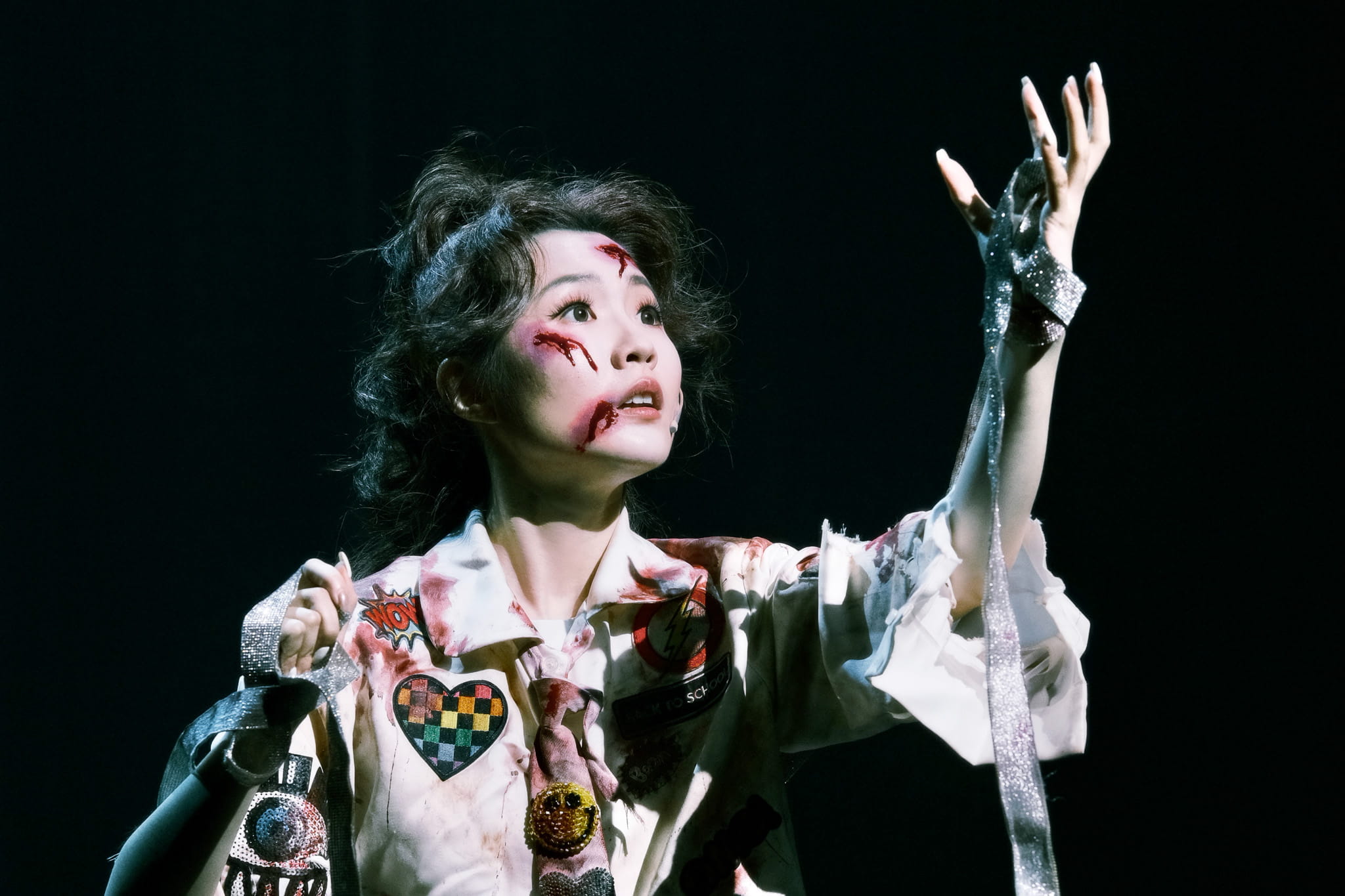
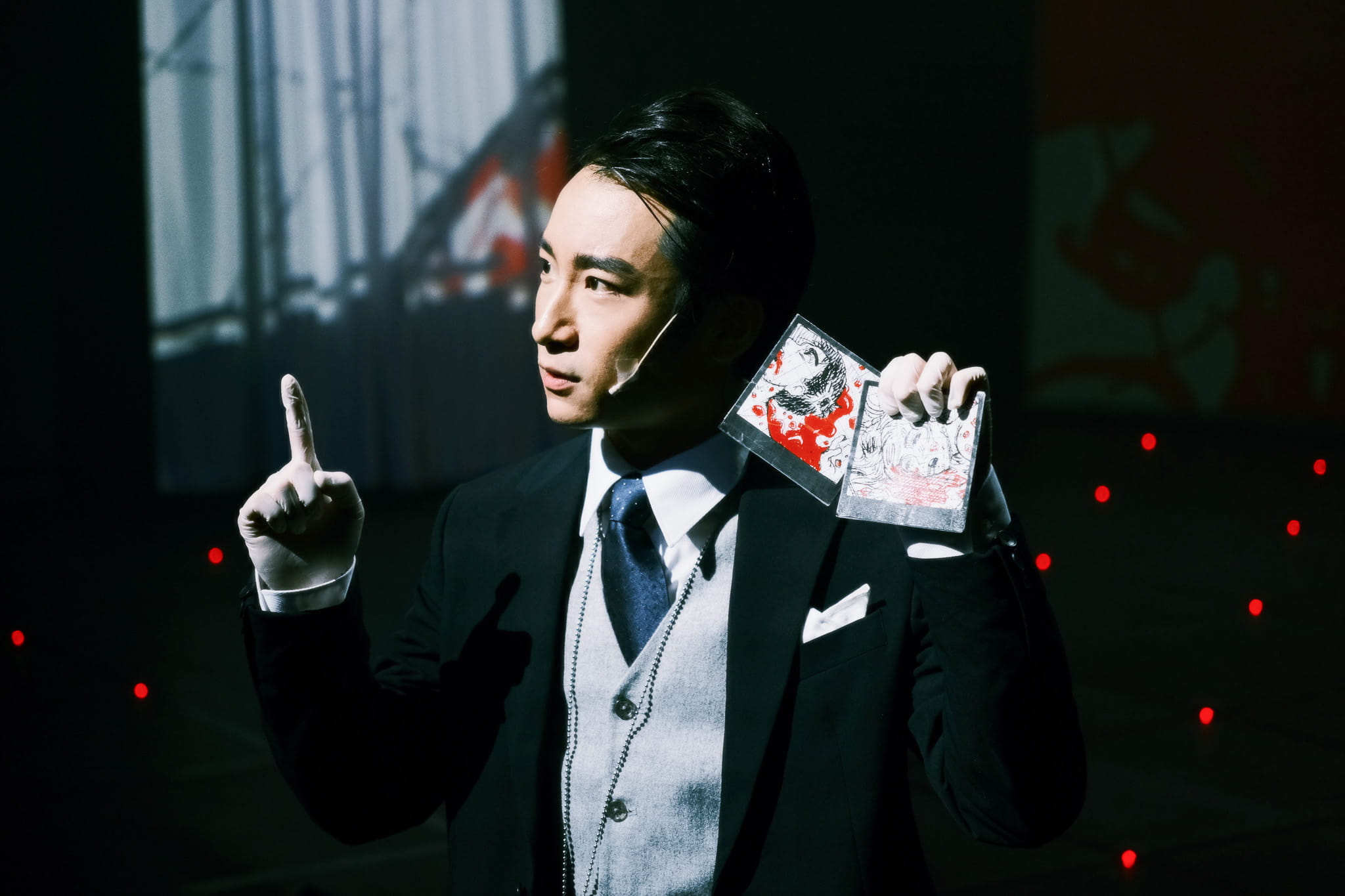
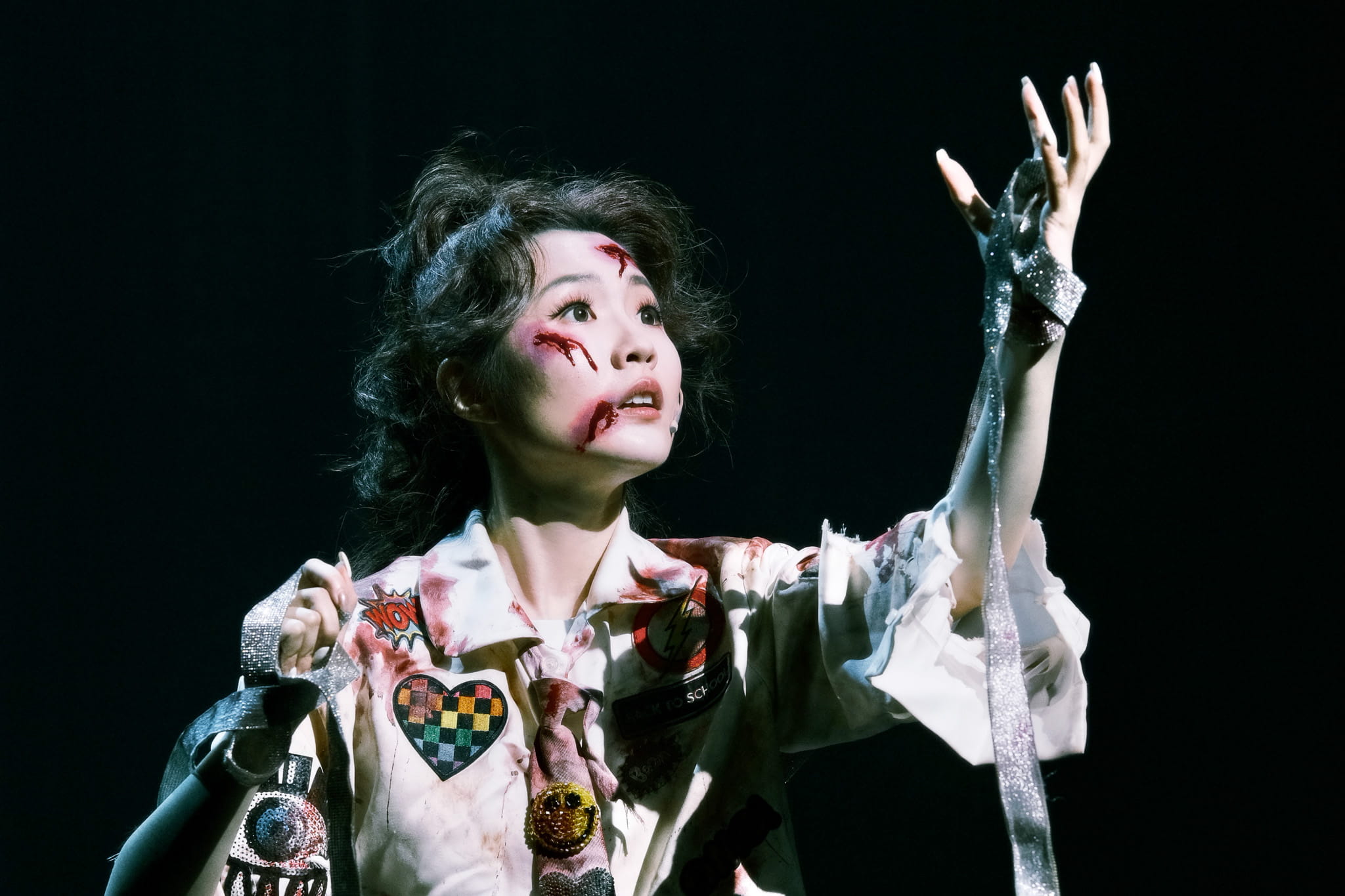
Version 2.1 of “13.67” brings in comic artist LAI Tat Tat Wing, fusing Hong Kong manga aesthetics into the immersive design. Emerging Cantonese opera performer WONG On Ching also makes an appearance, breaking from traditional operatic convention to perform as a vengeful female singer. Evolved stage design and Arts Tech consolidate the experience — audiences immerse in Kwan’s life and in Hong Kong’s transformation from 1967 to 2013.
Wave. Popular Culture Magazine (Wave. 流行文化誌), 7 May 2026
Zuni curated a playlist for “13·67” 2.1: “Below the Lion Rock” (獅子山下) and “Every Time Things Change” (每當變幻時) from the 70s; “A Woman Easily Hurt” (容易受傷的女人) and “Days We Walked Together” (一起走過的日子) from the 90s; “King of Karaoke” (K歌之王) and “Forever Beautiful” (終身美麗) from the 2000s. Is your song on the list?
These melodies carry the era’s pulse and the growing-up memories of generations — joy, sorrow, perseverance, and hope. Some are beloved classics; others are overlooked gems. After the show, let them take you back in time. Listen, and feel this city again.
Two routes, nearly twenty stops. The experience extends beyond the theatre. A walk lets you feel the overlap of fiction and reality equally well.
Staged by director Mathias Woo, “13·67” invites a “scene pilgrimage” beyond the theatre or book. Walk the real case locations, feel the protagonist’s urgency, and hold a conversation with Hong Kong’s past and present.
Original Novel: CHAN Ho Kei
Ⓒ Chan Ho-kei with authorisation from Crown Culture Corporation
Director, Set and Arts Tech Design: Mathias WOO
Adaptation: Mathias WOO, Carson CHUNG
Music Directors: Cedric CHAN, YU Yat Yiu
Visuals and Illustrations : LAI Tat Wing
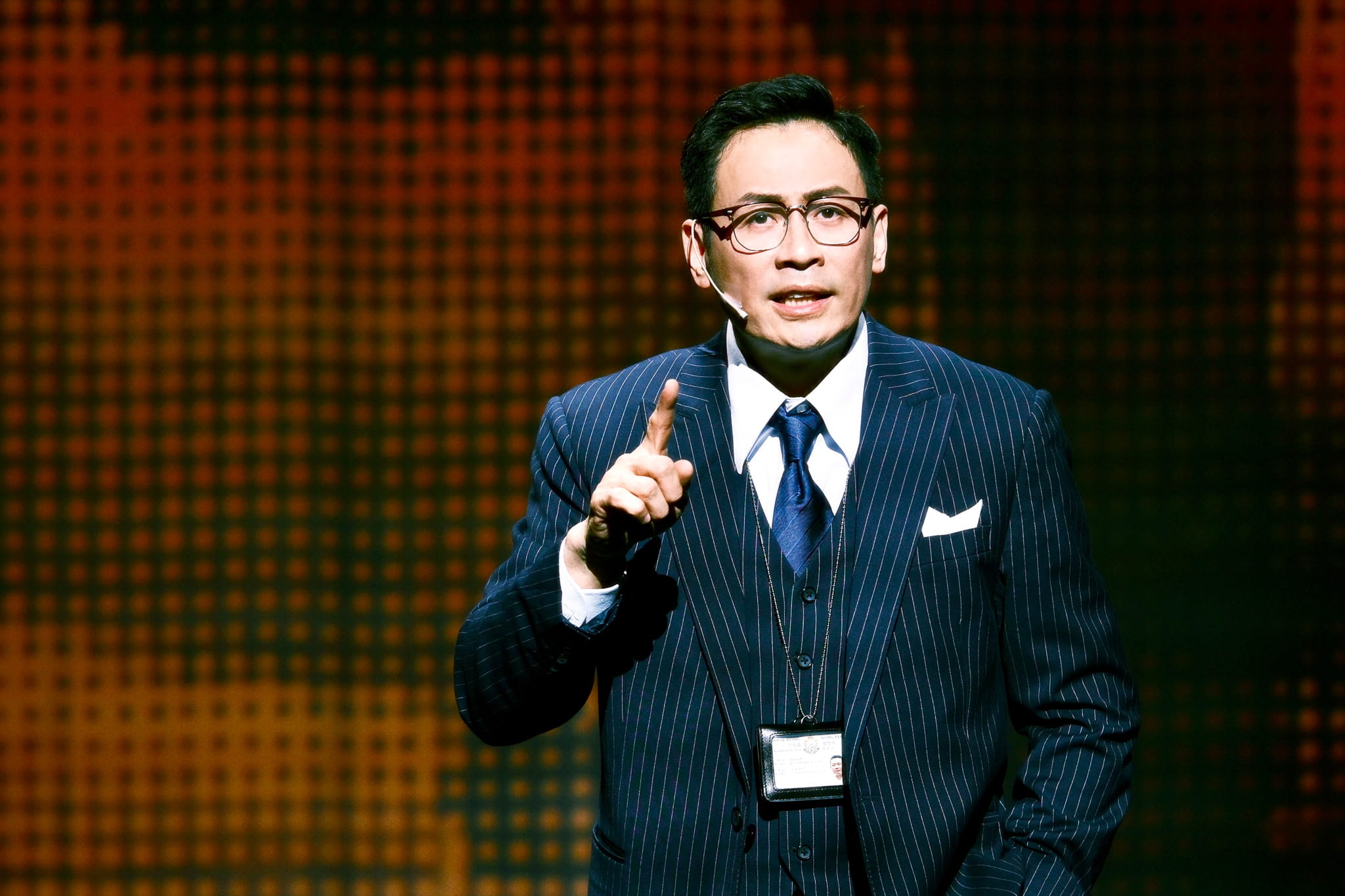
Performers: Carson CHUNG^, WONG On Ching, David YEUNG^, Zachary Pink YUNG^
Creative Coordinator: Cedric CHAN
Lighting Design: MAK Kwok Fai
Sound Design: Soloan CHUNG, Can. HA(2022-2025 versions)
Costume Design: Favour Production
Mr Joseph CHAN
Ms Hedy LAM
Production Manager: Lawrence LEE
Senior Manager (Production and Technical): CHOW Chun Yin
Graphic Design Execute: LIU Si
Stage Manager: Onki CHAN
Deputy Stage Manager: Zeta CHAN
Rehearsal Assistant: Chloe LI
Touchdesigner, Interaction Design / Video Co-production: Joanne XU
Animation/Video Co-production, Surtitle: Vanilla GUO
Server & Video Operation: YU Pui Ho, CHAN Wan Yi
Sound & Music Editing: Kairos SOU
Production Electrician: KWAN Chiu Kit
Make-up & Hair: Betty WAN, June CHAN, Carrie LEUNG, Panda WONG
Wardrobe: Bonnie CHAN
Stage Crew: Kenneth CHAN, CHIM Man Lung, SZE Chun Yue, Christopher WONG
International Exchange Director: WONG Yue Wai
General Manager (Administration and Finance): Jacky CHAN
General Manager (Programme): Doris KAN
Senior Manager (Programme): Bowie CHOW
Administration Manager: Colin CHENG
Project Manager (Arts Education): Momoko NG
Education Programme and Outreach Manager: Ricky CHENG
Marketing and Outreach Manager: Niki LUK
PR & Publicity: Luka WONG
Programme Assistant: Yumi HUI
Front-of-house Support: Jane CHEUK, Victor CHEUNG, Esther LAU
Editor-in-chief: Theresa LEUNG
Ticketing & Digital Marketing: HO Yin Hei
Graphic Design (Promotion): Pollux KWOK
Photography & Video Documentation: Tree LO
Photo Documentation: Nobby CHUNG, Ebohom LIGA
Graphic Design for Promotion: Carol MAK
English Translation (Promotion): Mona CHU
Copywriting for Promotion: Topaz CHIU, Song LEUNG, Seamus LI
In 2026, Zuni Icosahedron proudly becomes the Venue Partner of the Sheung Wan Civic Centre!
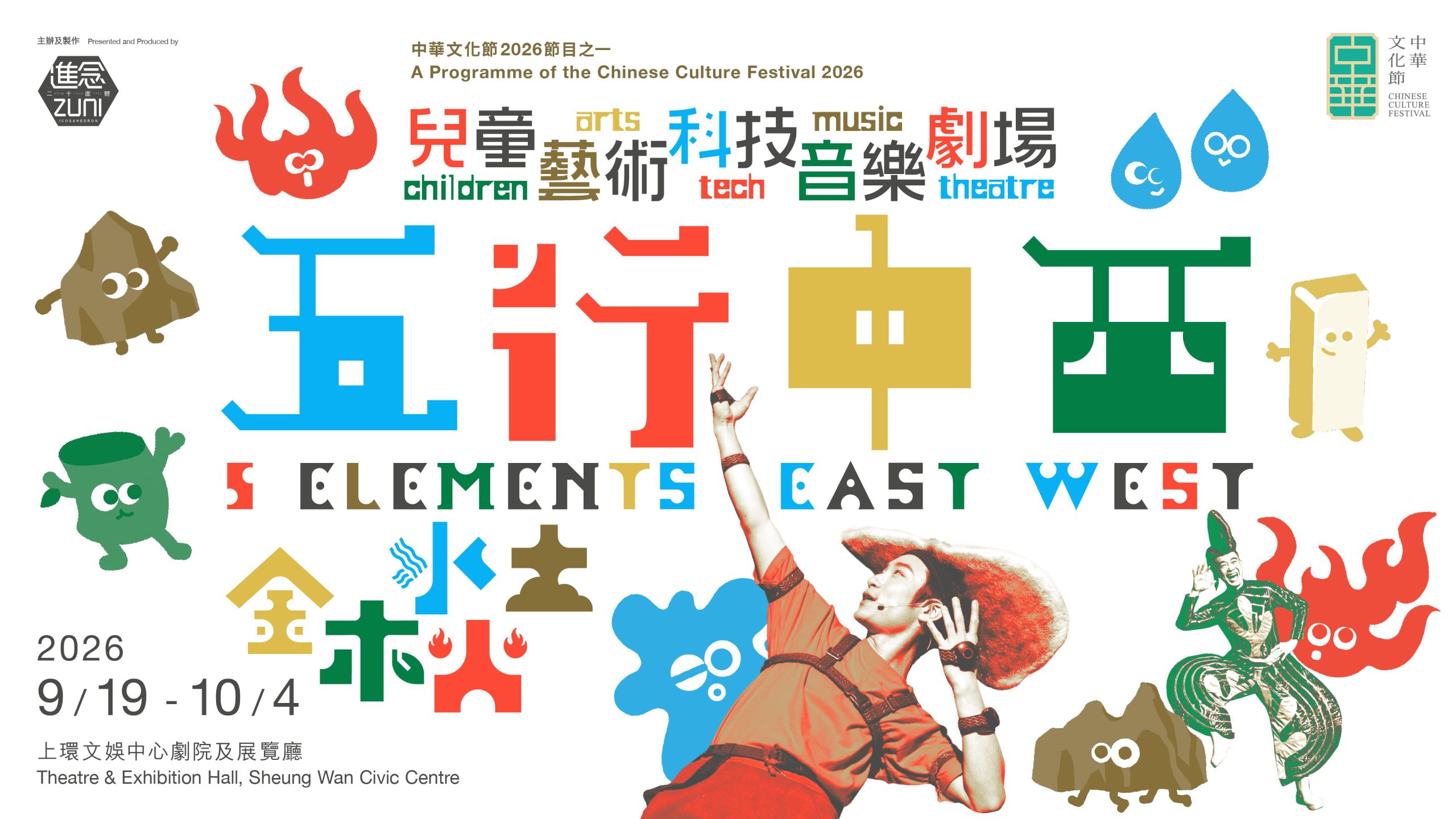
Beyond our Chinese Culture x Hong Kong Theatre line-up—including 5 Elements East West in September, 1587, A Year of No Significance, and What’s for Winter Solstice?—we are taking you into the heart of the neighborhood. We are collaborating with local cafés and connecting with historic shops. Exciting things are brewing in the corners and shops you pass by every day.
With our “Zuni Cultural Tourism Map & Guide,” you can experience the show, walk the neighborhood, and immerse yourself in the culture. Discover what makes Sheung Wan so vibrant. Keep an eye out and don’t miss a thing!
Art for All! Donate Now!!
The more you support, the wider the community art will reach. Purchase your ticket to a Zuni performance and buy a suspended ticket at HK$200, the suspended ticket quota will be gifted to a Comprehensive Social Security Assistance (CSSA) recipient or a service target of the Hong Kong Council of Social Service (HKCSS).