
Thank you for watching Lady Macbeth ~ Poetry. You’re most welcome to leave your comments in the online questionnaire.
This theatrical work grew from the mutual inspiration of a sentence, a poem, and a twist of fate.
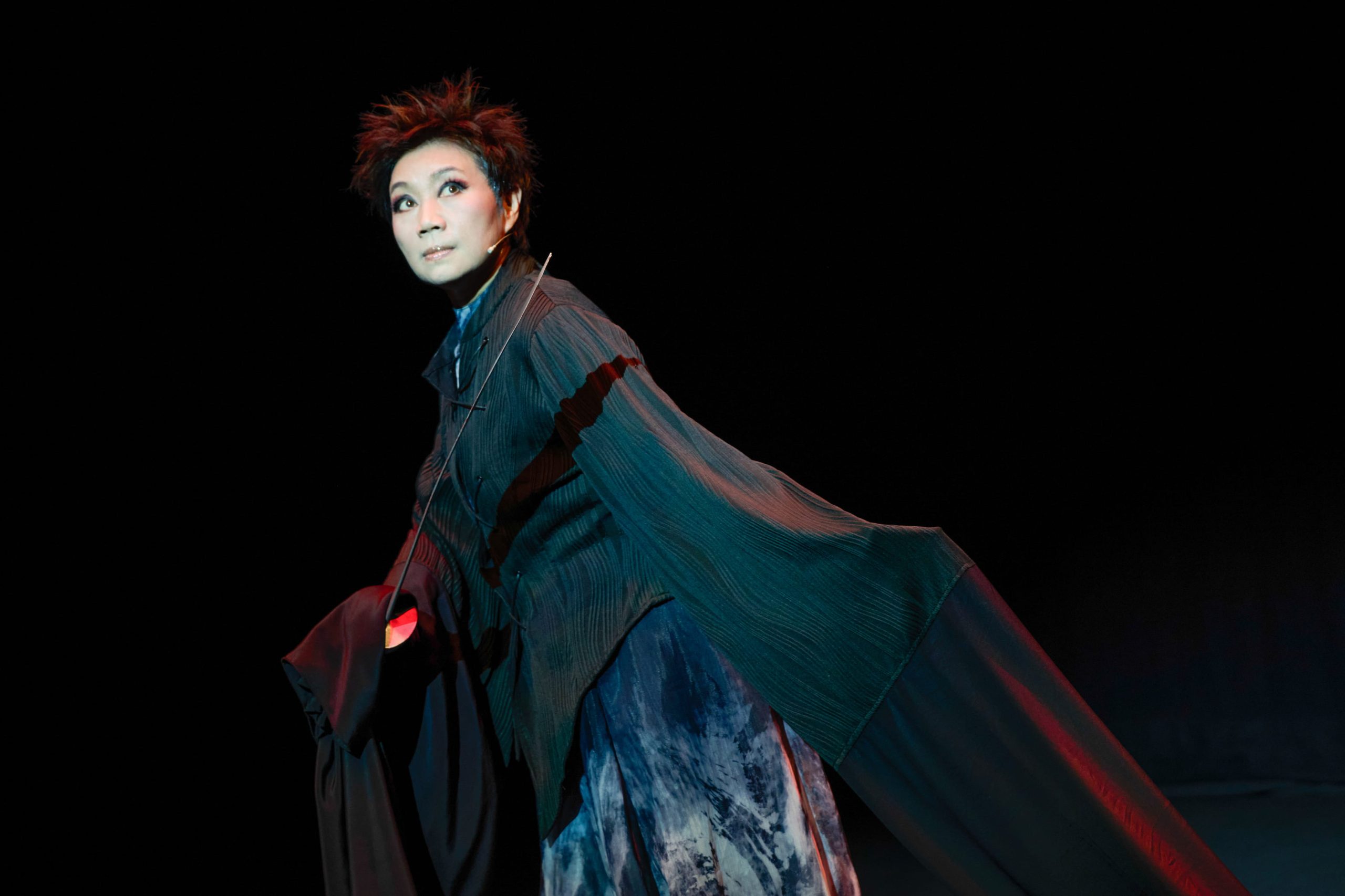
In 1998, Director Chen Xinyi told Sichuan Opera performer Tian Mansha, “You would be perfect as Lady Macbeth”. This planted a seed in Tian’s heart. She longed to explore this female character who, though given a relatively small role in Shakespeare’s original, carries an immense interior tension. Renowned playwright Xu Fen wrote her a solo piece condensing the entire world of Macbeth through the wife’s gaze alone. Rather than labelling her a “bad woman”, the script excavates why she walks this path, how she falls into darkness, and the inner torment of her wickedness, pathos, and lament. In this Sichuan Opera Lady Macbeth, Macbeth himself becomes a silent shadow — summoned and dismissed at will — and the stage is returned entirely to his wife.
In 2002, poet Zhai Yongming attended Tian’s performance and was profoundly moved. Writing as both observer and theatre critic, she composed the long poem Lady Macbeth — For Tian Mansha(《馬克白夫人—致田蔓莎》). Rather than simply recapping the show, the poem leverages the liberty of poetic language to touch upon desire, power, conspiracy, and fear. Years later, after watching the all-male Macbettu at Wuzhen Theatre Festival, Zhai wrote Three Witches(《三女巫》)and Who Is Knocking at the Door(《誰在敲門》), reimagining Shakespeare’s characters for the present while foreseeing a world of flame, conspiracy, and uncertainty.
These three poems, written across different periods, seemed bound by an invisible thread. When Tian read them, she was astonished. the verses felt written for this very exploration. A remarkable cycle was complete: Sichuan Opera had inspired the poetry, which now gave birth to new theatre.
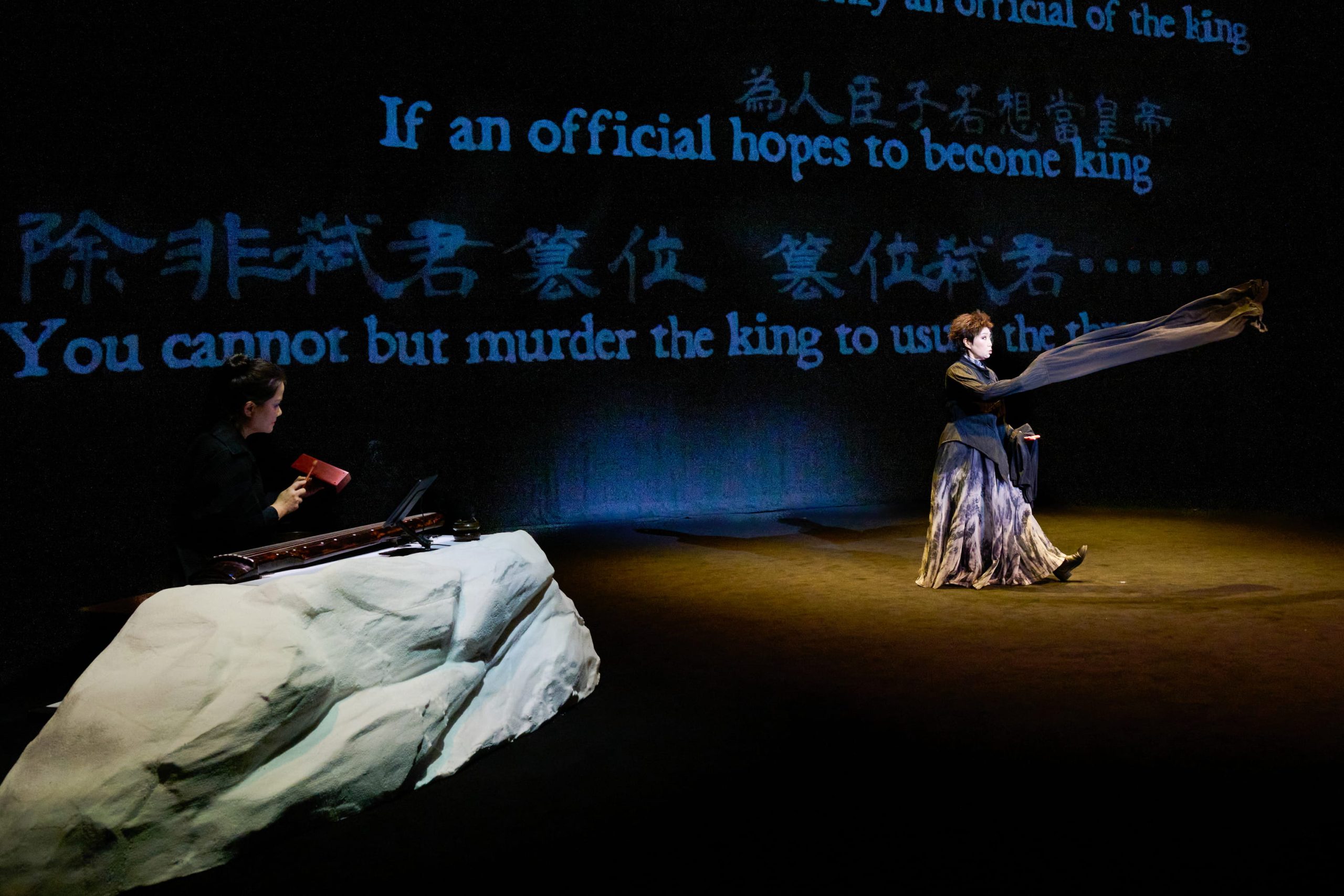
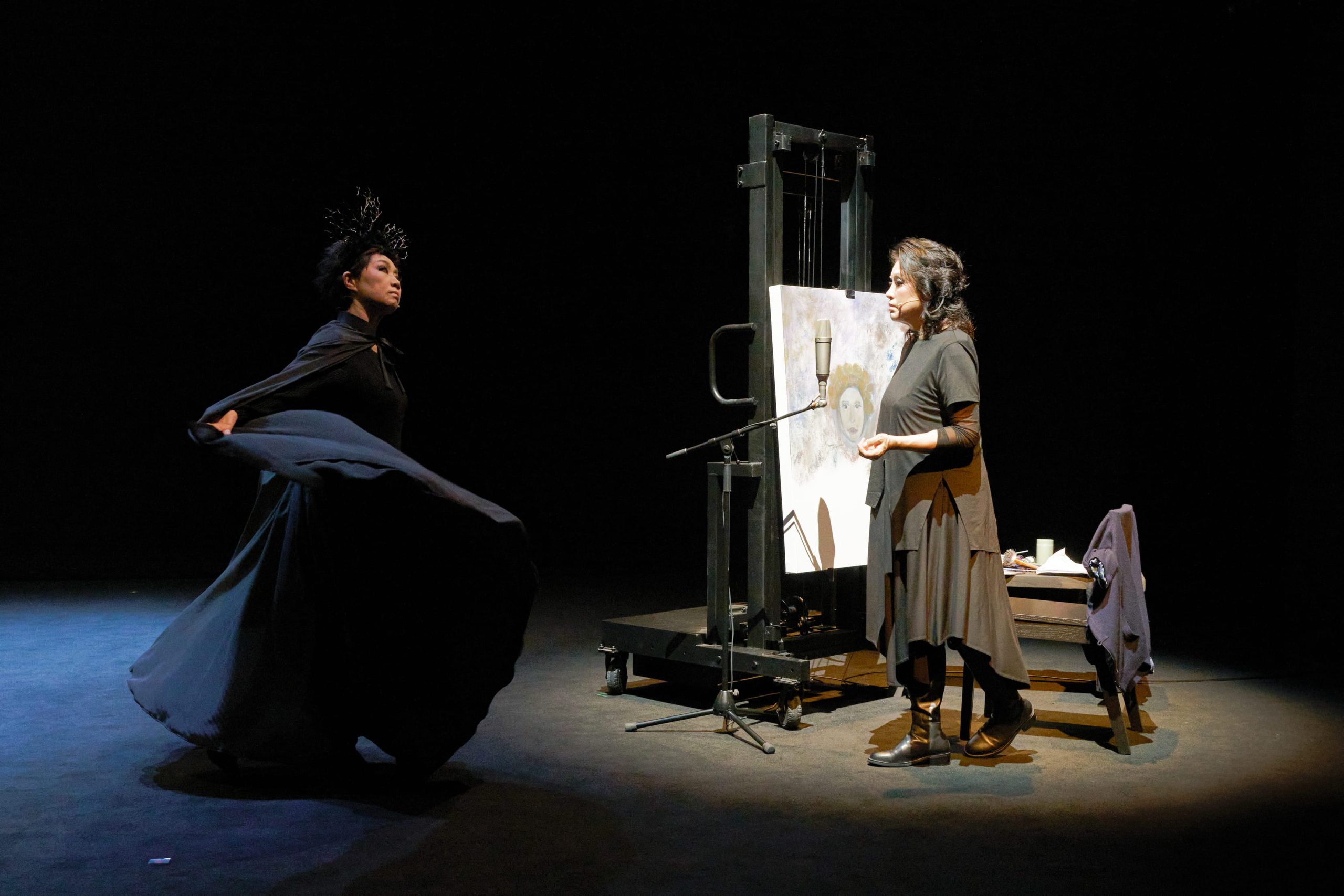
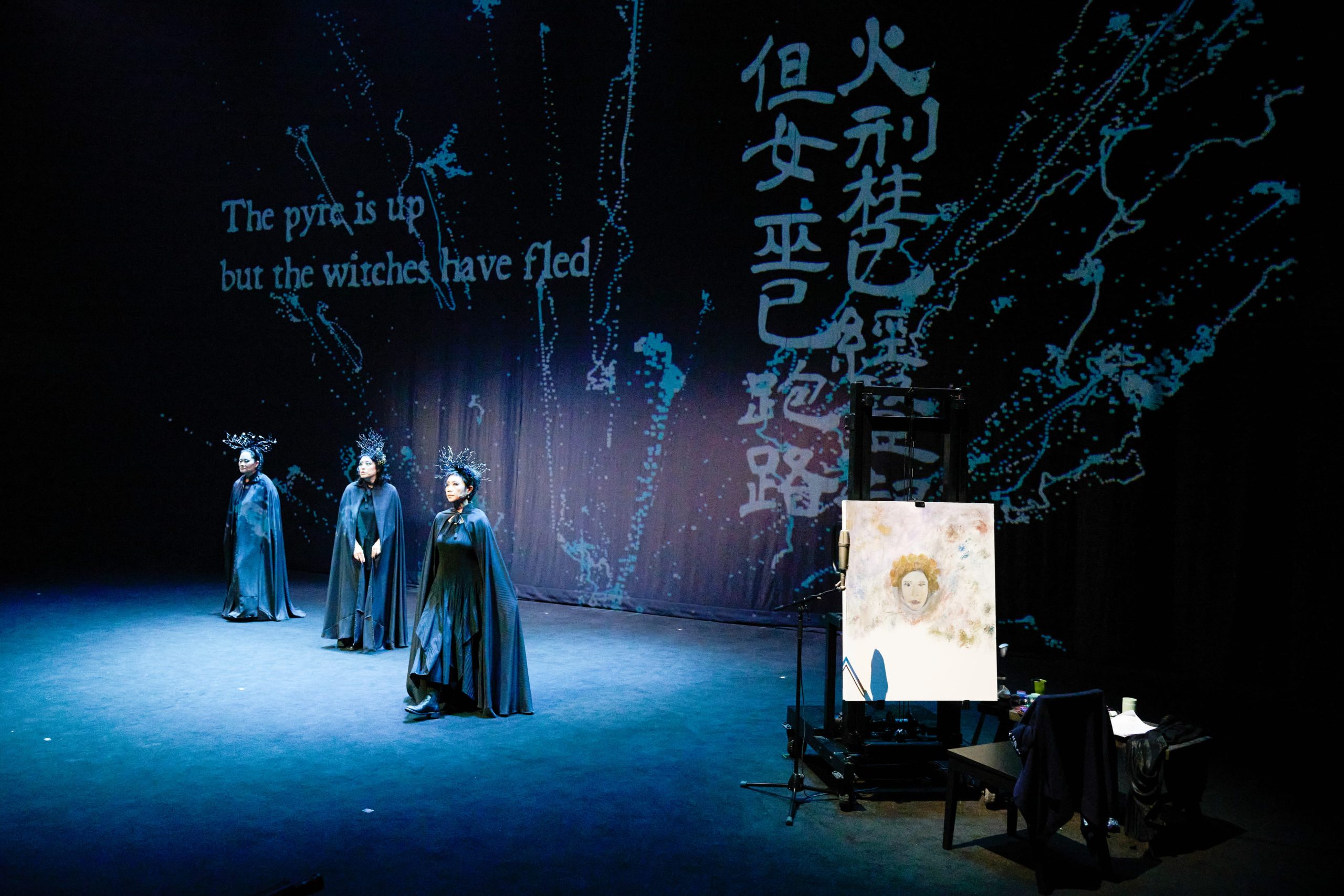
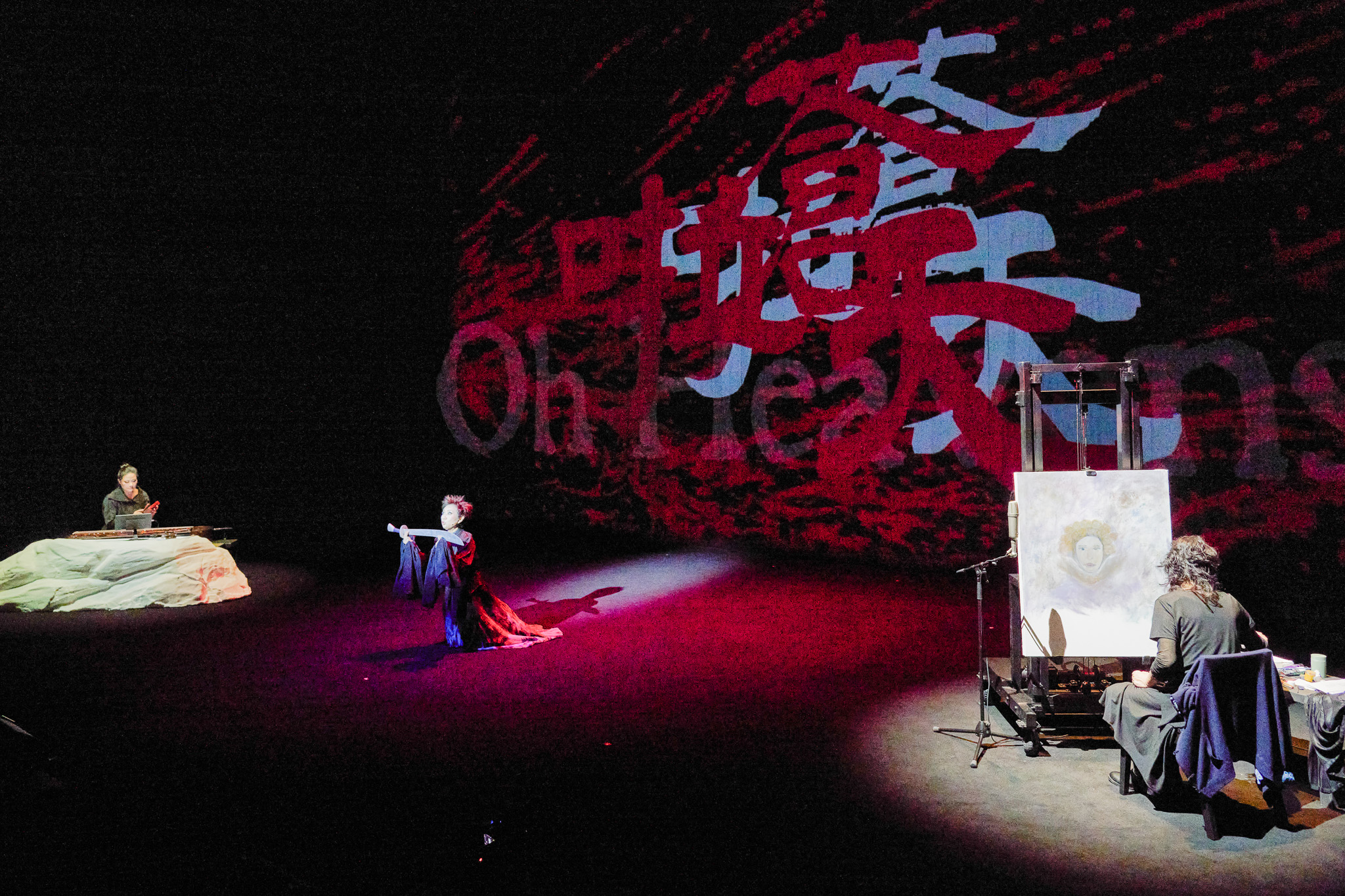
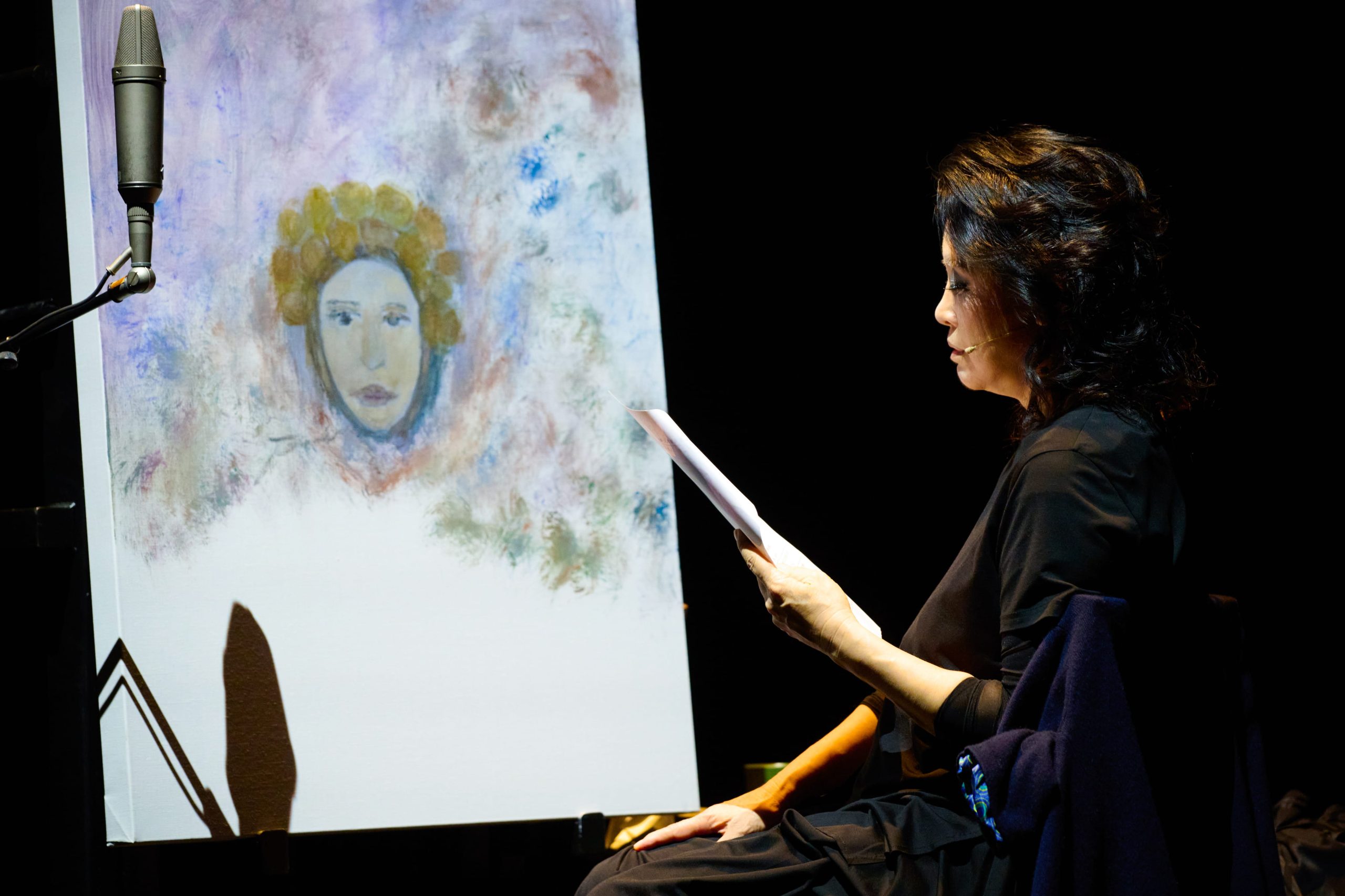
This work centres around Zhai Yongming’s poetry. The stage becomes the poet’s “creative laboratory”. Making her Hong Kong performance debut, she recites on stage while painting behind the scenes. The words she has written and the images in her mind are externalised as flowing, living pictures on stage.
Tian Mansha retains the four most essential passages from the Sichuan Opera monologue as a “play within the play.” Audiences witness her, through consummate mastery of Sichuan Opera’s high-pitched singing and water-sleeve technique, portray Lady Macbeth’s ambition before the regicide, her terror in its aftermath, and her final, complete mental dissolution. Moving between lucidity and transformation, leaping across fragments of memory past and present, she performs a riveting psychological drama.
When considering the music, the team knew they did not want a traditional Sichuan Opera orchestra on stage, and both Tian and Zhai independently thought of guqin performer Wu Na. Zhai and Wu had previously collaborated many times, improvising between poetry and music, and she knew well that Wu’s music is “both traditional and modern, with a remarkable capacity for improvisation.” As it happened, Wu had spent years running Man Xuetang, the institute she founded, and had only just wrapped that chapter, freeing her at just the right moment. The three came together instantly, charged with creative excitement.
Wu’s involvement expanded the sonic possibilities of the show. She is at once a soloist, a structural architect of music, and a live performer. Her music moves between planned structure and spontaneous improvisation, using the meditative murmur of the guqin and the crisp strike of specially crafted instruments to replace the traditional Sichuan opera percussion, and to hold a dialogue across time with Tian’s recitation and song. For Wu, this millennial-old instrument in a work probing human desire again becomes a vessel that speaks directly to the heart.
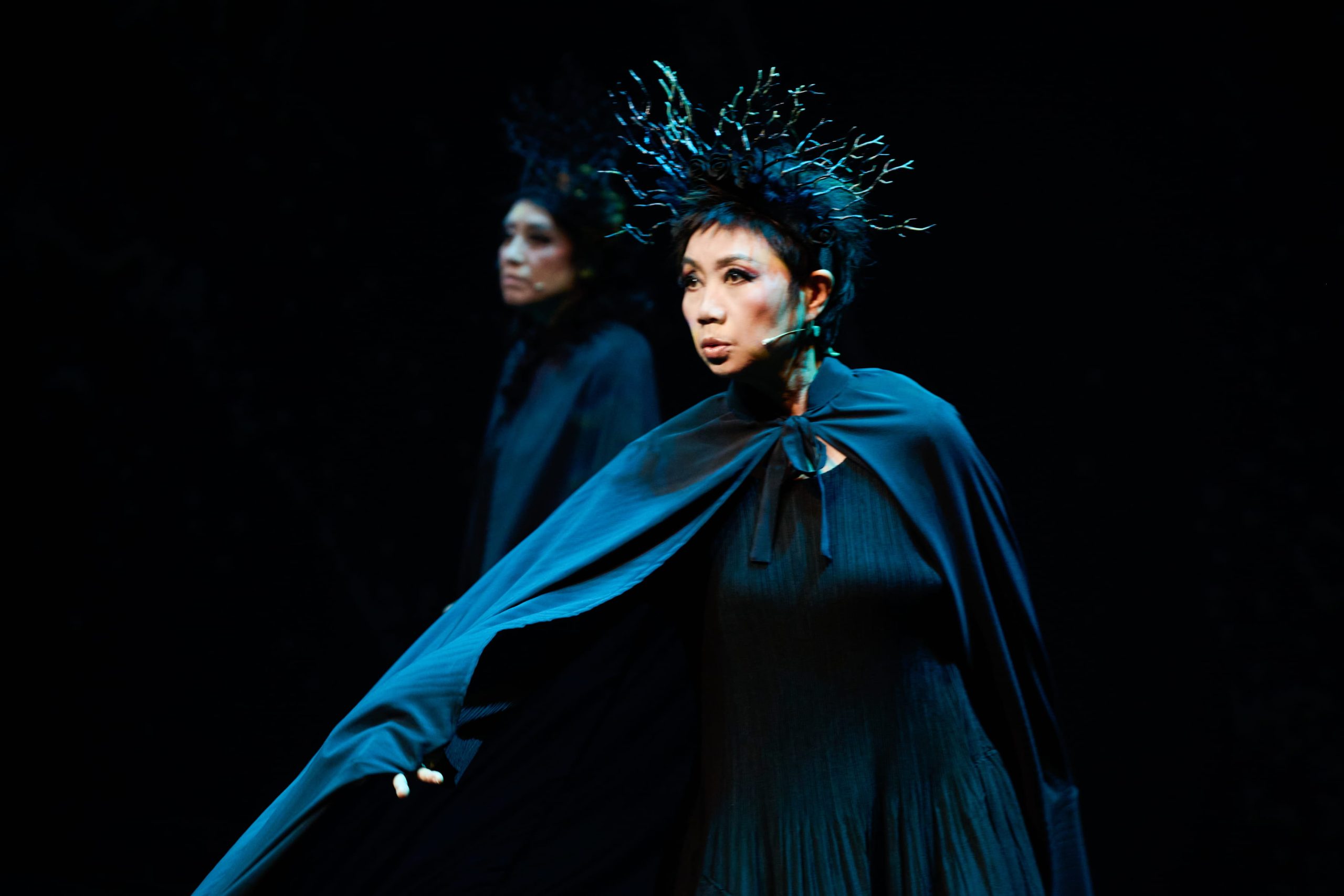
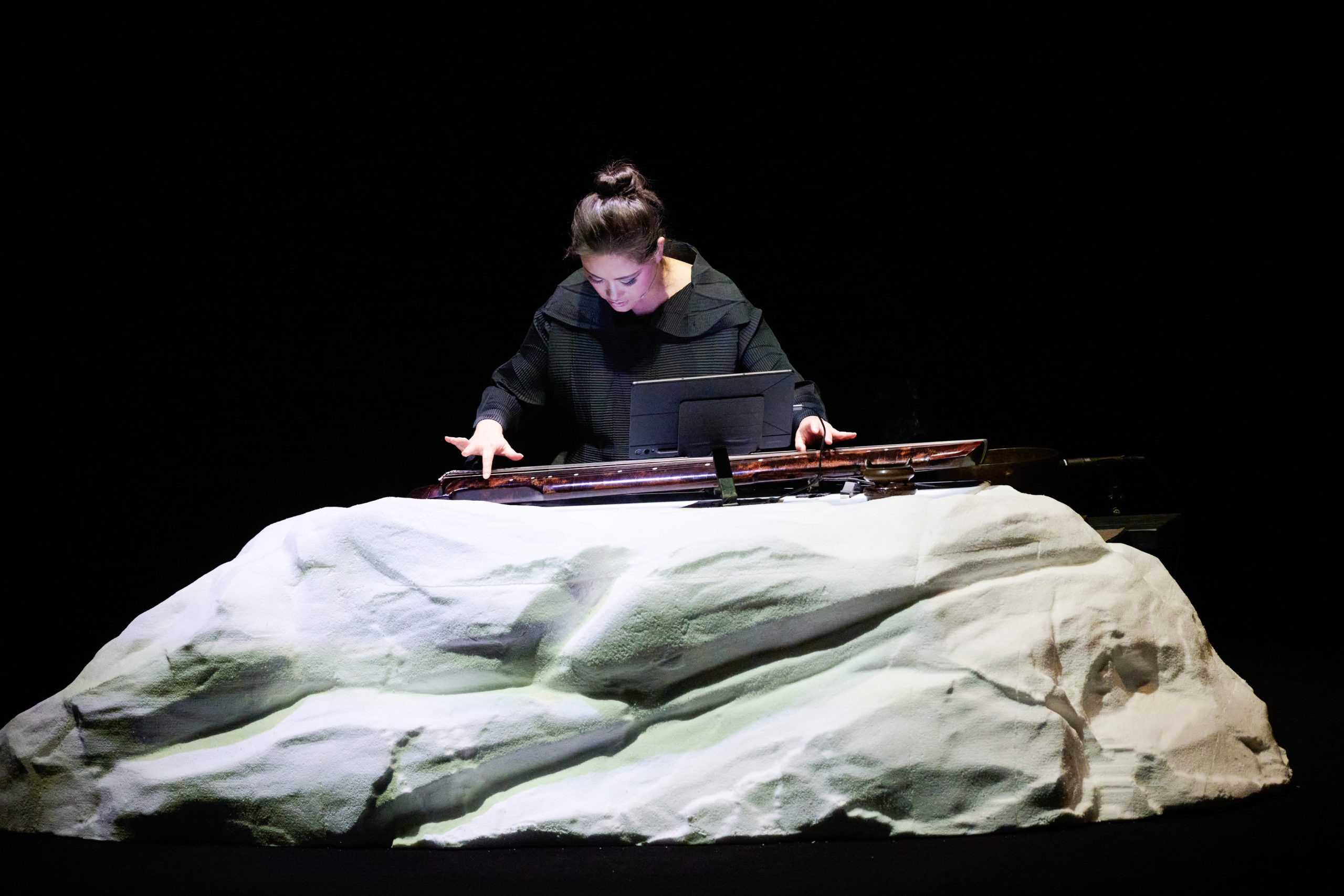
Lady Macbeth ~ Poetry does not seek to “clear Lady Macbeth’s name”, but to use her as a prism that refracts deep questions transcending gender and era. In the work, three performers — a poet, a theatre artist, a musician — are simultaneously narrators and embodiments of “contemporary witches” who move between the world of the play and the world outside it.
The work’s primary inquiry is into the rationale behind the desire for power and self-destruction. As Tian has said, Xu Fen’s script is “not about presenting a bad woman, but why a woman walks this path, the process of walking it, and the consequences she has to bear.” External forces only catalyse her destruction; what is truly fatal is an unbearable guilt and fear. “When a person has done such a deed, the unease, self-reproach, and terror that come from within, I believe, are more intense than anything that comes from without.” This points to a timeless truth: when desire drives one across the moral threshold, the true reckoning comes from within.
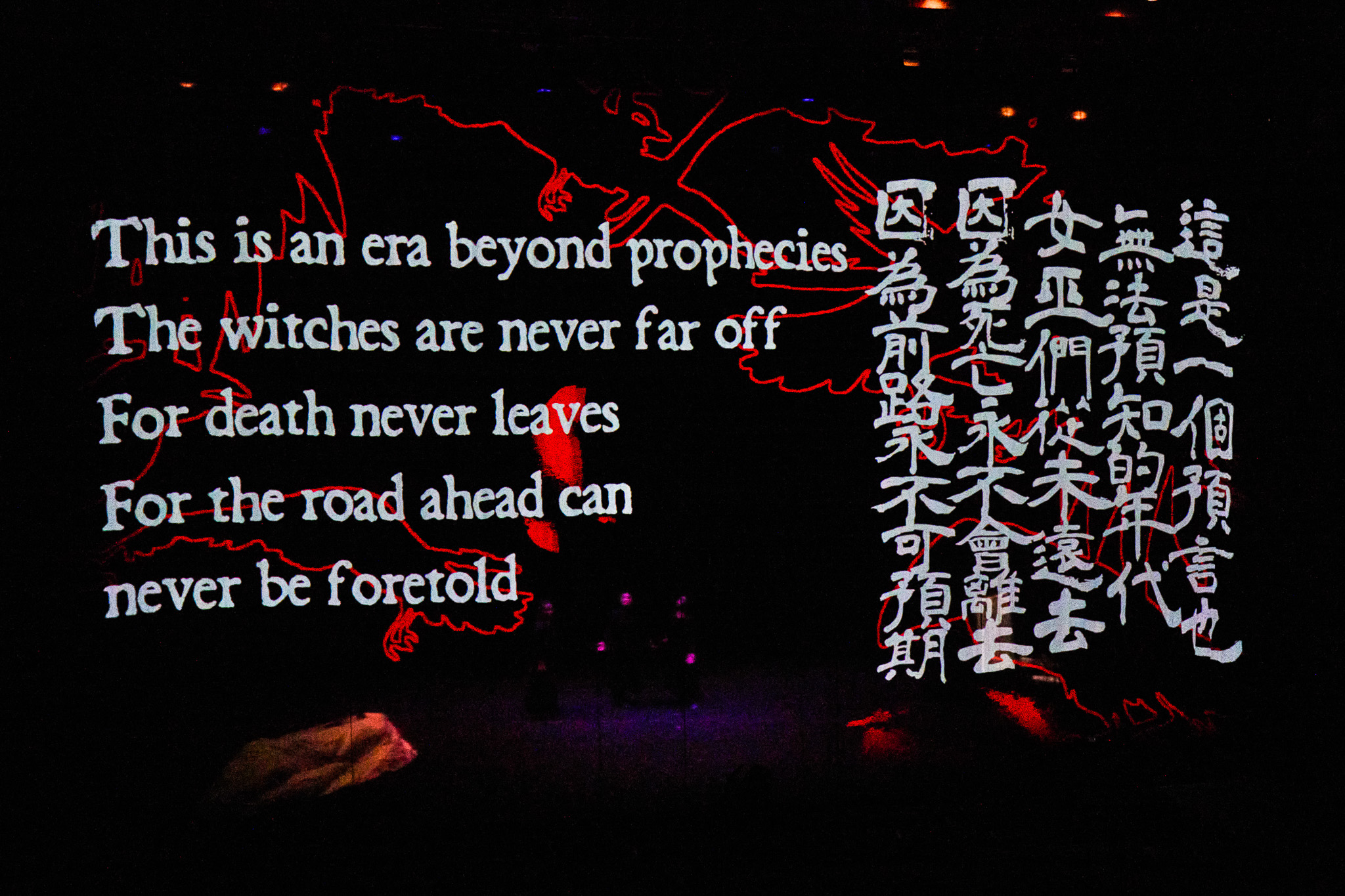
At the same time, the work acutely registers the disorder of our era and the failure of “prophecy.” Lines from Zhai’s poems are invoked repeatedly: “This is an age that even prophecy cannot foresee / Because death will never depart / Because the road ahead can never be foretold.” As Tian interprets it, “Flames are everywhere; conspiracy covers the world; war and plague run rampant.” The work invokes the ‘witch’ not only as homage to Shakespeare, but as a response to our world’s disorder: when the old orders and prophecies have lost their power, how does a person face an unknowable, uncontrollable future?
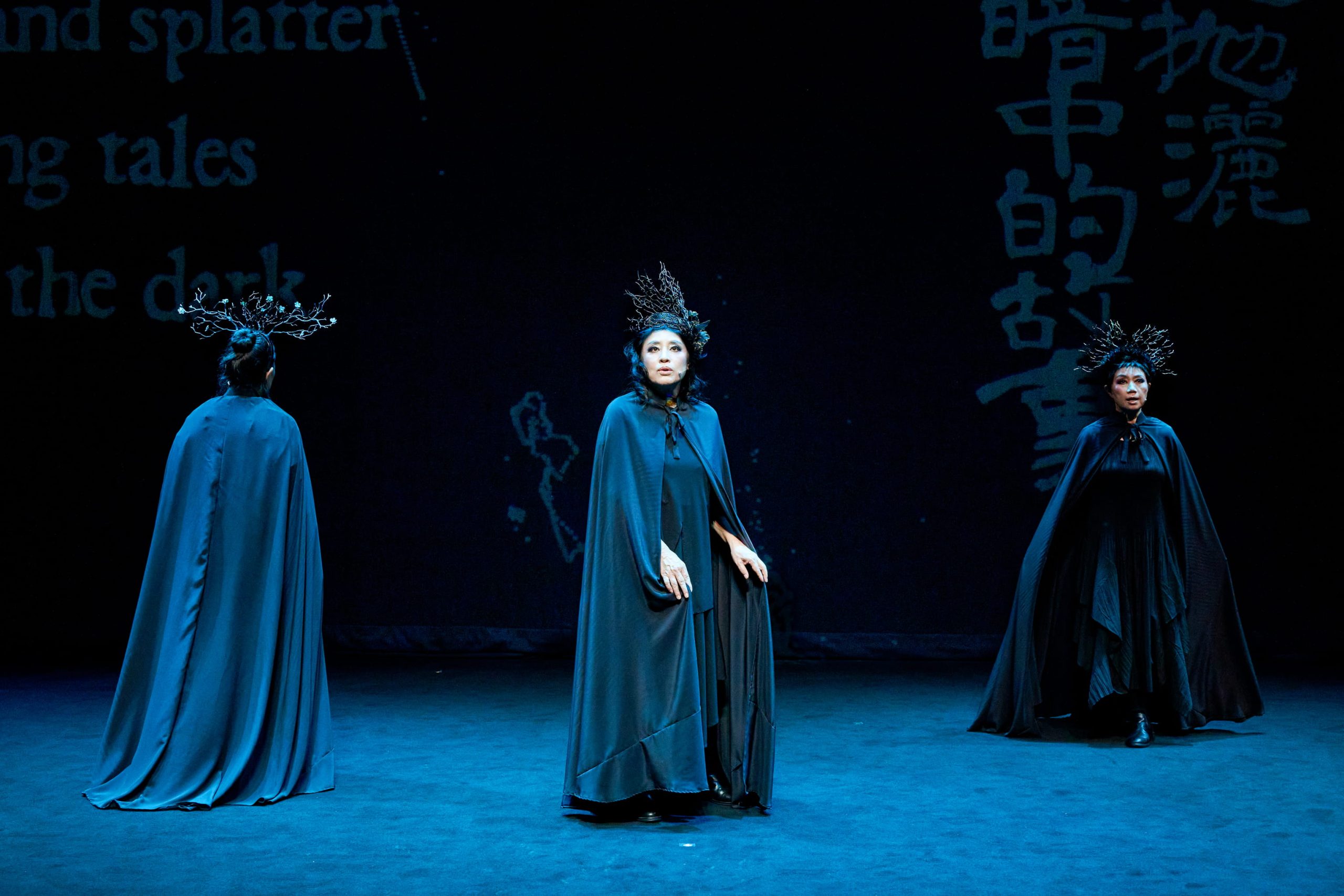
The image of the “witch” carries yet another layer of historical and contemporary resonance. Zhai observes that the witch-hunts of the Middle Ages were a suppression of “non-mainstream women” — female doctors, prophetesses, widows. And is the implicit silencing of certain women in today’s social discourse not another form of witch-hunting in disguise? In the production, the presence of “Macbeth in the air” is eliminated; his wife is placed at the centre of the stage. This itself is a subversion of the established narrative of power.
And at its root, as Wu puts it, “Whether past, present, or future, human nature never leaves the stage.” As a guqin player, she distils Lady Macbeth into a contemplation of human nature itself — not a question of man or woman, but the shared condition of the “human being” confronting desire, fear, and guilt. The essential quality of the guqin, in her view, is that it “transcends gender”, providing a more humanistic perspective.
Lady Macbeth ~ Poetry is a response to the Shakespearean classic that reaches across time and art forms, and more profoundly, a convergence between three women artists where life and creation meet. Through their individual disciplines, they gaze together upon the eternal tumult and upheaval within human nature.
Who’s knocking?
Who’s knocking?
Who’s knocking?
Who’s knocking?
The pyre is up, but the witches have fled
Night has fallen, silent as a tomb
Moon has also fled, escorted by black clouds
Sounds of chit chit chat chat
Chit chit chat chat
Chit chit chat chat
Slivers of silver spill and splatter
Telling tales from the dark
Tales of usurping, conspiracy
Of murder, of erasing crime scenes
How they holler and howl
Rubbing their shriveled hands, leaking prophecies
Everything stays the same
Everything stays the same
Everything, everything
Everything comes round once again
In dark nights darkness needs dark cauldron’s dark prophecies
After many centuries
Fire pyre has become world center’s dragon chair
Earth shattering conspiracy covers the entire world
Everywhere fire, and covert settlings
Everywhere war, and rampant viruses
In north south east west, everywhere
Upheavals have no form, outcries have no roar
Hiss, hiss, hiss, hiss
Upheavals have no form, outcries have no voice
Hiss…
This is an era beyond prophecies
Though witches are not far off, scripts and stages
Have long become tasteless and bland
Drama and performance can only happen in the audience
Endings are either left open, or are cut off
Until they drown, going downwith the end of times
Aie aie aie aie
The witches are never far off
For death never leaves
For the road ahead can never be foretold
Who’s knocking? Who’s knocking?
Who’s knocking
The knocking continues, knocking loud and clear
Who’s knocking, everyone knows
Rusty iron gates, heavy wooden doors
Steel gates, metal doors
Different materials, the same knocking
What is barred outside the door? Murder?
Or the body of the murdered?
What is locked inside the door? Fear
Or the crime by the fearful?
What is barred outside the door? Wronged souls
Or the power and benefits of his body?
What is locked inside the door? Greed
Or ambitions and courage magnified by greed?
Knocking upon knocking
Who’s knocking?
Clean and clear knocking
Who is out to kill?
Knocking with such force?
Who’s denouncing?
Knocking so softly
Who’s weeping?
Make-believe doors
Can never block the rush of death
Make-believe doors
Can never stamp wild brambles
One two three four
Five six seven eight
How many doors
Have choked off countless heroism
One shot two shot three shot four shot
Five shot six shot seven shot eight shot
Inside and outside the door centuries old echoes linger
Knocking sadly
Who’s knocking?
Knocking and sobbing
Who’s knocking?
Knocking eagerly
Who’s knocking?
Knocking and sighing
Who’s knocking?
In the book and on stage
The two Ladies MacBeth
Are not the same
In the book Lady MacBeth
Had a short life
Though shy she wanted to lord it over all others
And rule a tattered world
For this she paid with her life
The Lady MacBeth on stage
Radiant and dazzling
Steps onto stage in a purple gown
Eyes glittering
Looking to devour the world off stage
Imagine us crouching behind the curtain
We can look down through her eyes
And see the world as it is?
We are sure to spot successful men and
Successful women
On the left and on the right
They have filled the hall
We can also see their seats
Are as worn as before
Much as we crane our necks
This is all we can see
Lady MacBeth under the spotlight
Can see into their inner heart
Everyone has a dream
Bubbling away, churning up great anxiety
All this is also written on the screen on stage
As we already know
MacBeth needs the power rod
Lady MacBeth only needs a long sleeve
A long sleeve one that can flip in and out
What’s called “Water Sleeve” in traditional theatre
Water sleeve has no water but can shoot out
Filling the sky with killing like a bucket of ocean
Water sleeve can also twist and turn
Perfect symbol of a woman’s fate and
Her innate ambitions
Lady MacBeth in the book
And Lady MacBeth on stage
Are one and the same
The woman on stage and the women off stage
Are also one and the same
In dark nights darkness needs
dark cauldron’s dark prophecies
After many centuries
Fire pyre has become the dragon chair of world center
Earth shattering conspiracy covers the entire world
Everywhere fire, and covert settlings
Everywhere war and rampant viruses
In north south east west everywhere
In north south east west everywhere
Everywhere everywhere
This is an era beyond prophecies
Though witches are not far off, scripts and stages
Have long become tasteless and bland
Drama and performance can only happen in the audience
Endings are either left open, or cut short
Until they drown, going down with the end of times
Going down with the end of times
Down down down
This is an era beyond prophecies
For death
For death
For death
never leaves
For the road ahead
For the road ahead
For the road ahead
Can never be foretold


Poem / Text Composition: ZHAI Yongming
Librettist of the chuanju (Sichuan opera) Lady Macbeth: XU Fen
Co-Director (Performance Dramaturg / Stage Directing and Blocking): TIAN Mansha
Co-Director (Stage Design / Arts Tech): Mathias WOO
Guqin Music Composition: WU Na
Starring: ZHAI Yongming, TIAN Mansha, WU Na
International Exchange Director: WONG Yue Wai
Music Director, Creative Coordinator: Cedric CHAN
Sound Design: Soloan CHUNG
Lighting Design: Zoe CHEUNG
Set Design Execution: LIU Si
Costume Design: Favour Production
Poem / Text Translation: Diana LIAO
Translation of the chuanju (Sichuan opera) Lady Macbeth: ZHANG Yujuen
Three Ladies MacBeth (Acrylic on canvas) by ZHAI Yongming
Video documentation of the chuanju (Sichuan opera) Lady Macbeth (1999) provided by TIAN Mansha
Production Manager: Lawrence LEE
Senior Manager (Production and Technical), Lighting Programming/Operation: CHOW Chun Yin
Stage Manager: Onki CHAN
Deputy Stage Manager: Zeta CHAN
Set Production: Art Floor Production Limited
Touchdesigner, Interaction Design / Video: Joanne XU
Video Operator: YU Pui Ho
Production Electrician: KWAN Chiu Kit
Make-up & Hair: Vanessa SO, Betty WAN
Technical Assistant, Surtitle: Vanilla GUO
Wardrobe: Bonnie CHAN
Stage Crew: Eric CHAN, Kenneth CHAN, Eison FOK, SO Long Ting
Creative Assistant: Chloe LI
General Manager (Administration and Finance): Jacky CHAN
General Manager (Programme): Doris KAN
Senior Manager (Programme): Bowie CHOW
Administration Manager: Colin CHENG
Marketing and Outreach Manager: Niki LUK
Project Assistant: Yumi HUI
Editor-in-chief: Theresa LEUNG
Key Visual & Graphic Design (Promotion): Ivan CHAN, Dio LAU
PR & Publicity: Luka WONG
Ticketing & Digital Marketing: HO Yin Hei
Promotional Copywriting: Heidi SHEK
Social Media Marketing Production: TSURUMI 24
Translation for Promotion: Mona CHU
Photography: Ebohom LIGA, Nobby CHUNG
Video Documentation: Ally CHAN, LIN Kar Ming
White Night
Manxuetang
Tian Mansha Xiqu
ZENG Sipei
LI Qunying
HONG Xiansong
LUO Ying
WANG Yiran
SUN Kai
LIU Waitong
A Book Club
Aha Cafe & Bistro
Alice Theatre Laboratory
Art and Culture Outreach (ACO)
Art Tool Selling
Asia Art Archive
Asia Society Hong Kong Center
Book & Co.
Book Punch
Boundary Bookstore
Café & Shop at Sun Museum
Café 34T
Cha
Chi Lin Nunnery
Chillax Place
CityUHK Department of Chinese and History
Cosmos Books Ltd.
CUHK Department of Music
Department of Comparative Literature, HKU
Do Nothing Book Shop
East Kowloon Cultural Centre (EKCC)
EDUHK Chinese Orchestra
El Camino Music Art Centre Hong Kong
Eslite Bookstore
Espresso Remedy
Faculty of Arts, Lingnan University
flow float
Francki Coffee
Fringe Club
Goose’ Chocolate
HKMU Chinese Music Project
HKMU Ina Ho Cantonese Opera Research Centre
HKU Department of Music
HKU School of English
Hodim
Hong Kong Arts Centre
Hong Kong Arts Festival
Hong Kong Gu Qin Association
Hong Kong Readers
Hong Kong Visual Arts Centre
HOP·ER
Indigo Coffee
Koolbeanz
Kubrick
Lily Bookshop
Luck Win Bookstore
Macau Literary Festival
Meanwhile Coffee
Oil Street Art Space
Podcasting Theatre
Relaxbit Atelier
Reverie Bookstore
Samkee Book
School of Arts and Social Sciences, HKMU
School of Creative Media, CityUHK
Shang Hai Dun Huang
Soul fresh
Square Records
Sunday Morning Coffee
Tai Kwun
The Book Cure
Tiao Chinese Music
Venner
Voice and Verse Poetry Magazine
Windmill Grass Theatre
Xplore Hong Kong
YMCA
Yuan Yuan Tang
Ztoryhome


From 1967 to 2013, Hong Kong was rocked by a series of extraordinary crimes—prison breaks, kidnappings, shootouts, and high-profile murders. Every case met its match in one legendary detective.
Adapted from the award-winning novel 13.67 by Hong Kong mystery maestro Chan Ho Kei
Featuring hand-drawn scenography by renowned comic artist Lai Tat Tat Wing
Returning this May for a 5th highly acclaimed re-run
Where Immersive Arts Tech meets Hong Kong’s historical heritage
🗓️ 2026.5.22-29
📍 Studio Theatre, Hong Kong Cultural Centre
🎟️ Standard $280|Local Full-time Student $120
Through the lens of Arts Tech, we seek to present raw sensation and memory, connecting history, the future, and the individual in a single, electrified instant.
In the 2026/27 season, Zuni Icosahedron presents “Image Experiment Soundscape Experience” (實影驗音).

Art for All! Donate Now!!
The more you support, the wider the community art will reach. Purchase your ticket to a Zuni performance and buy a suspended ticket at HK$200, the suspended ticket quota will be gifted to a Comprehensive Social Security Assistance (CSSA) recipient or a service target of the Hong Kong Council of Social Service (HKCSS).


